DescriptionTamron 17-70mm F/2.8 Di III-A VC RXD Nikon Z (APS-C) description
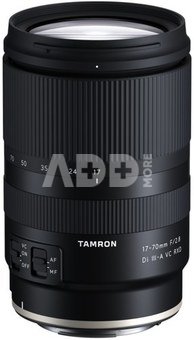
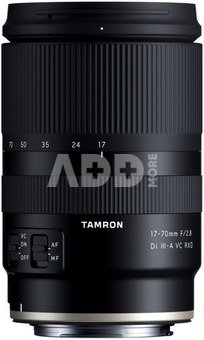
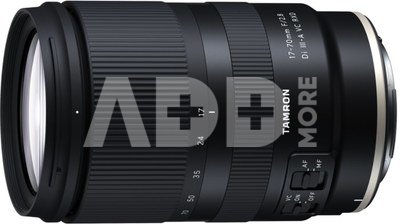
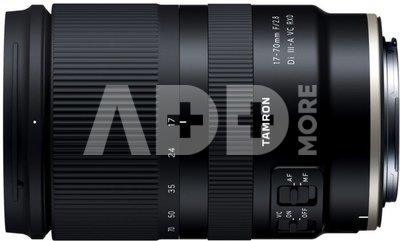
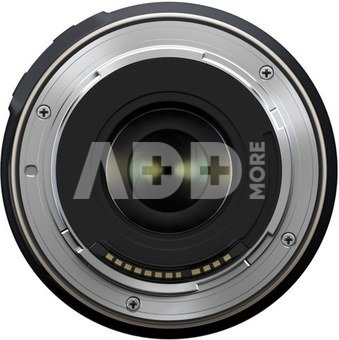
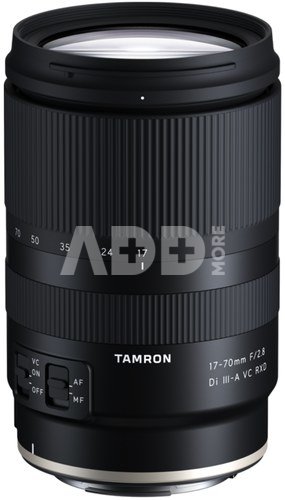
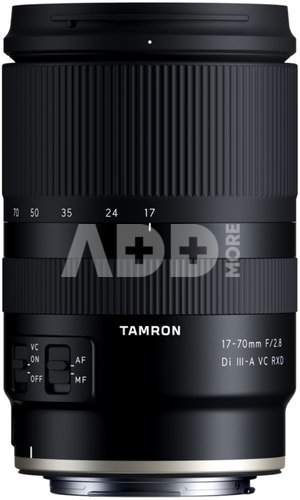
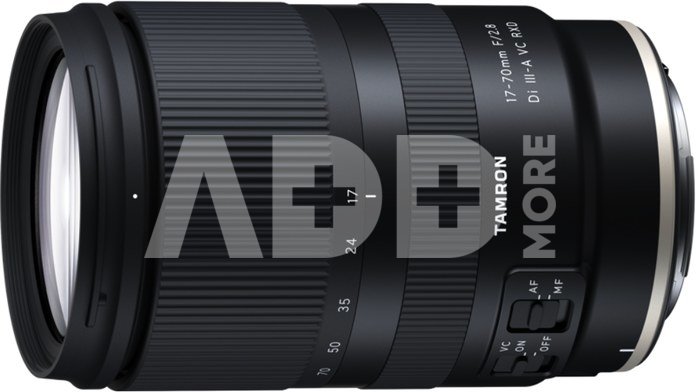
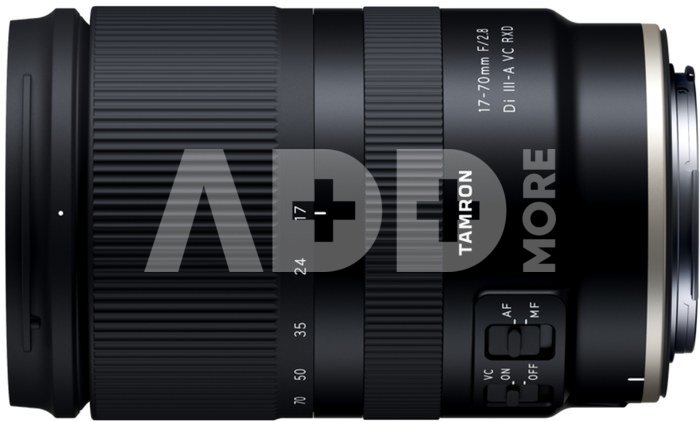
The Tamron 17-70mm F/2.8 Di III-A VC RXD covers a highly practical range from wide-angle to medium telephoto. On a Nikon Z APS-C camera, it provides a full-frame equivalent field of view of approximately 25.5-105mm. This allows one lens to handle landscapes, street photography, everyday scenes, family events, portraits and detailed shots. The constant F2.8 maximum aperture is available throughout the entire zoom range. It supports low-light shooting, faster shutter speeds and attractive background blur. The optical design consists of 16 elements in 12 groups, including two LD, two GM and one hybrid aspherical element for high resolution and contrast across the image. Tamron’s built-in VC system reduces the effects of camera shake during handheld shooting. For video, the stabilisation system automatically provides suitable compensation for a wide range of shooting situations, making the lens useful for both stills and video production. The RXD stepping motor provides fast, accurate and quiet autofocus. Suppressed focus breathing helps maintain a more natural angle of view during focus transitions. Firmware for the Nikon Z version can be updated through the desktop version of Tamron Lens Utility. The lens focuses as close as 0.19m at the wide end and 0.39m at the telephoto end. Despite its broad 4.1x zoom range and built-in stabilisation, the Nikon Z version weighs approximately 540g.
Who is it for?
The lens is ideal for:
everyday and travel photography;
portraits and family photography;
street and urban photography;
landscapes and architecture;
events and documentary work;
video content creation;
users who want one lens to replace several commonly used focal lengths.
Key benefits
versatile 17-70mm focal range;
25.5-105mm full-frame equivalent;
constant F2.8 aperture;
4.1x optical zoom ratio;
built-in VC image stabilisation;
fast and quiet RXD autofocus;
suppressed focus breathing for video;
minimum focus distance of 0.19m;
nine-blade circular diaphragm;
moisture-resistant construction;
fluorine coating on the front element;
firmware updates through Tamron Lens Utility;
standard 67mm filter size;
compact 540g design.
Comparison with alternatives
Compared with the Nikon NIKKOR Z DX 16-50mm kit lens, the Tamron provides a broader focal range, a constant F2.8 aperture, stronger background separation and built-in VC stabilisation. It is, however, larger and heavier.
Compared with the NIKKOR Z DX 18-140mm, the Tamron has a shorter telephoto reach but is significantly faster throughout the zoom range. It is therefore better suited to portraits, events and low-light video, while the 18-140mm remains more convenient when maximum zoom range is the priority.
FAQ
Is the lens designed for full-frame Nikon Z cameras?
It is designed for Nikon Z APS-C cameras. A full-frame Nikon Z camera would use DX crop mode.
What is the full-frame equivalent focal range?
On Nikon Z APS-C cameras, the 17-70mm range is equivalent to approximately 25.5-105mm.
Is F2.8 available throughout the zoom range?
Yes. The maximum aperture remains F2.8 from 17mm to 70mm.
Does the lens include image stabilisation?
Yes. It features Tamron VC image stabilisation.
Is the lens suitable for video?
Yes. Quiet RXD autofocus, VC stabilisation and suppressed focus breathing make it suitable for both stills and video.
Can the lens firmware be updated?
Yes. Firmware for the Nikon Z version can be updated using Tamron Lens Utility for PC.
Specifications
Manufacturer: Tamron
Model: B070
Lens type: standard zoom lens
Sensor format: APS-C
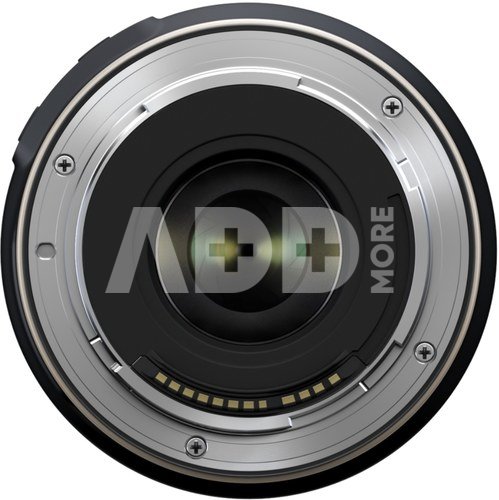
Lens mount: Nikon Z
Focal length: 17-70mm
Full-frame equivalent: 25.5-105mm
Zoom ratio: 4.1x
Maximum aperture: F2.8
Minimum aperture: F22
Optical construction: 16 elements in 12 groups
Angle of view: 80°37′-23°17′
Minimum focus distance: 0.19m at wide / 0.39m at telephoto
Maximum magnification: 1:4.8 at wide / 1:5.2 at telephoto
Image stabilisation: Tamron VC
Focus motor: RXD
Aperture blades: 9, circular
Filter size: 67mm
Maximum diameter: 74.6mm
Length: 121.3mm
Weight: 540g
Protection: moisture-resistant construction and fluorine coating
Firmware updates: through Tamron Lens Utility for PC
Supplied accessories: lens, flower-shaped hood, front cap and rear cap
Colour: black
Lens mount (bayonet)
Nikon Z mount
Type
zoom
Typ of SensorAPS-C
Discuss with a consultant in Kaunas
We don't haveKlaipėdaAddress: Birželio 23-iosios g. 23gWorking hours: I-V 09:00 - 18:00VI-VII not workingPhone: +370 674 59488
Discuss with a consultant in Klaipėda
We don't haveKlaipėdaAddress: Taikos pr. 17Working hours: I-V 10:00 - 19:00VI 10:00 - 14:00VII not workingPhone: +370 604 43972
1. How to choose the right lens for a mirrorless camera?
When choosing the right lens for a mirrorless camera, it is important to consider your photography needs and style. First, decide on the resolution and focusing distance you require. For portraits, lenses with a wide aperture, such as a 50mm f/1.8, are often preferred. If you enjoy landscapes, go for a wide-angle lens (e.g., 24mm). To capture distant objects, telephoto lenses (e.g., 70-200mm) are useful. Another important factor is the lens’s light-gathering ability, which affects performance in low-light conditions. A stabilization system can also be important, especially for longer lenses. It’s important to evaluate the build quality of the lens and the manufacturer's reputation. Try out several lenses and consider your future needs to choose the right and long-lasting investment in your photography.
2. Are all lenses compatible with all mirrorless cameras?
Not all lenses are universal for all mirrorless cameras. Different manufacturers may have different mounts, so it is important to check the lens compatibility with your camera. For example, lenses for Canon, Nikon, Sony, and other manufacturers' mirrorless cameras may not be interchangeable without adapters. It is also important to consider the sensor size. APS-C lenses may be disproportionately large for full-frame cameras. Before purchasing a lens, it is advisable to check the manufacturer's compatibility chart and consider the specific requirements of your camera. Adapters can allow the use of third-party lenses, but there may be some loss in functionality or quality.
The website uses cookies, which help you ensure quality of service. Continuing browsing, you agree with fotoaparatas.lt cookies policy.Agree


.jpg)
.jpg)















Reviews
0 average rating (0 votes)