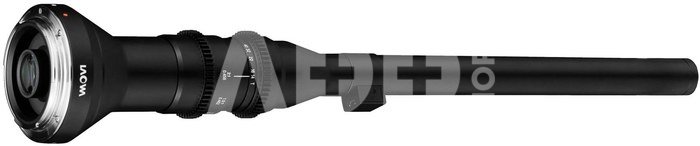
Laowa 24mm f/14 2X Macro Probe Canon EF (CINE)
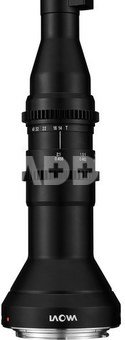
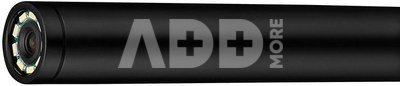
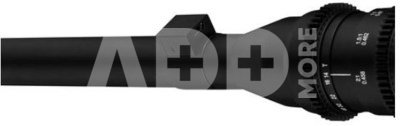
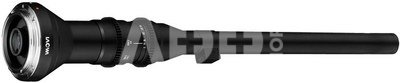
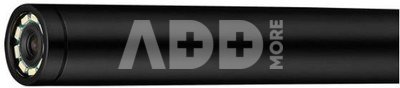
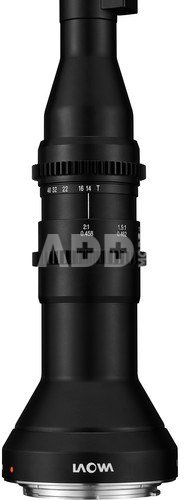
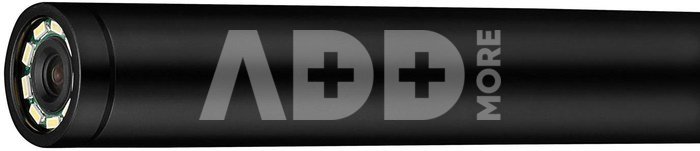
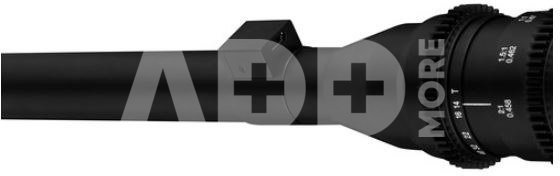
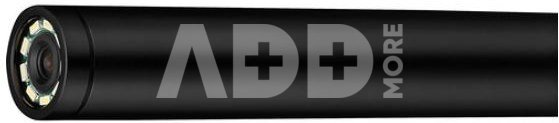
The optical design includes both extra-low dispersion and extra-refractive index elements, which help to suppress chromatic and spherical aberrations for a high degree of clarity, color accuracy, and sharpness. Manual focus control permits focusing from 1.5' to infinity, and the front of the lens has a built-in LED ring light to aid in focusing at close distances. The slim 0.2" diameter of the front of the lens barrel also offers greater opportunities for lighting subjects from the front. Additionally, the front portion of the lens is waterproof and permits working with subjects just beneath the surface of the water or in dusty or trying environments. This "cine-mod" version of the lens has been optimized for video use and features integrated gears on both the aperture and focus rings for doing iris and focus pulls using a follow focus. Unique macro lens design offers a greater-than-life-sized 2:1 maximum magnification along with a minimum focusing distance of 1.5' and a working distance of just 0.8". The long tubular lens barrel contributes to producing a distinct bug-eye perspective and, despite the short working distance, the length of the lens barrel places the camera at a comfortable shooting distance. Wide-angle 24mm focal length affords greater depth of field and more surrounding detail than traditional telephoto macro designs, which tend to isolate subject matter with shallow depth of field. Optical design includes two extra-low dispersion elements that control color fringing and chromatic aberrations to produce greater clarity and color accuracy. One extra refractive index element is also featured, which reduces spherical aberrations and distortion for improved sharpness and accurate rendering. Slim 0.8" front diameter allows performing unique "slide-in" shots as well as affords a greater range of close-up, inconspicuous shooting opportunities. The smaller front diameter also makes it easier to illuminate close-up subjects from the front. The front of the lens is waterproof, allowing you to comfortably work just under the water surface or in dusty environments. The front of the lens has a built-in LED ring light which is powered via a micro-USB port on the barrel, providing some illumination on close-up subjects for easier focusing. Designed for use as a close-up macro lens, the manual focus operation also lets you focus at infinity. This "cine-mod" version of the lens has built-in focus and aperture gears to aid in doing focus and iris pulls. Seven-blade diaphragm contributes to a pleasing bokeh quality.
Max Aperture
14 F
Focal length Movie
24 mm
Warranty
24 months
Discuss with a consultant in Kaunas
We don't have
Klaipėda Address: Birželio 23-iosios g. 23g Working hours: I-V 09:00 - 18:00 VI-VII not working Phone: +370 674 59488
Discuss with a consultant in Klaipėda
We don't have
Klaipėda Address: Taikos pr. 17 Working hours: I-V 10:00 - 19:00 VI 10:00 - 14:00 VII not working Phone: +370 604 43972
1. How to choose the right lens for a mirrorless camera?
When choosing the right lens for a mirrorless camera, it is important to consider your photography needs and style. First, decide on the resolution and focusing distance you require. For portraits, lenses with a wide aperture, such as a 50mm f/1.8, are often preferred. If you enjoy landscapes, go for a wide-angle lens (e.g., 24mm). To capture distant objects, telephoto lenses (e.g., 70-200mm) are useful. Another important factor is the lens’s light-gathering ability, which affects performance in low-light conditions. A stabilization system can also be important, especially for longer lenses. It’s important to evaluate the build quality of the lens and the manufacturer's reputation. Try out several lenses and consider your future needs to choose the right and long-lasting investment in your photography.
2. Are all lenses compatible with all mirrorless cameras?
Not all lenses are universal for all mirrorless cameras. Different manufacturers may have different mounts, so it is important to check the lens compatibility with your camera. For example, lenses for Canon, Nikon, Sony, and other manufacturers' mirrorless cameras may not be interchangeable without adapters. It is also important to consider the sensor size. APS-C lenses may be disproportionately large for full-frame cameras. Before purchasing a lens, it is advisable to check the manufacturer's compatibility chart and consider the specific requirements of your camera. Adapters can allow the use of third-party lenses, but there may be some loss in functionality or quality.



















Reviews
0 average rating (0 votes)