DescriptionSigma 300-600MM F4 DG OS SPORTS SONY E/FE description
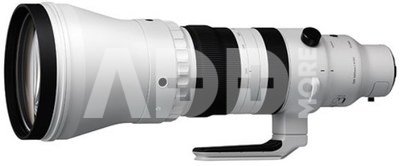
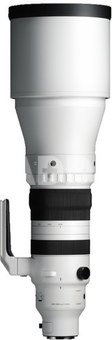
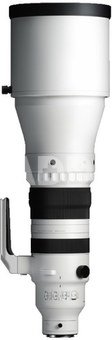
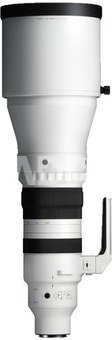
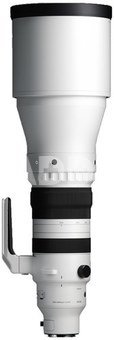
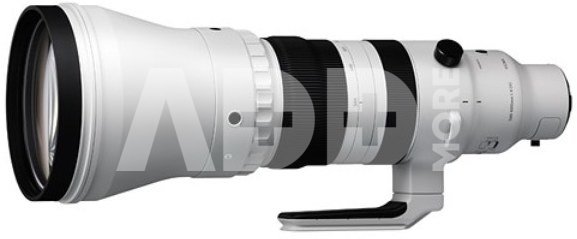
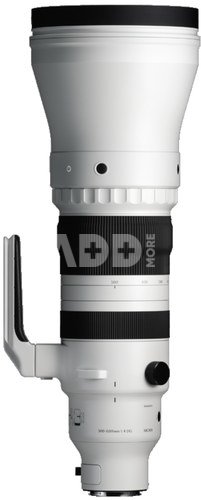
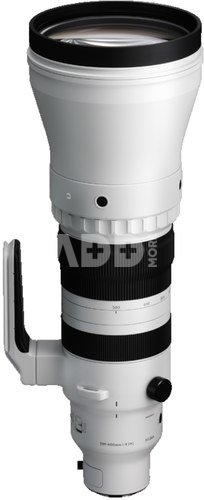
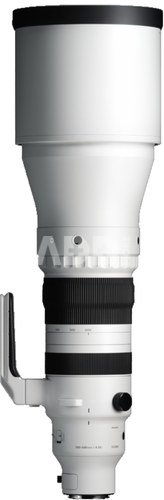
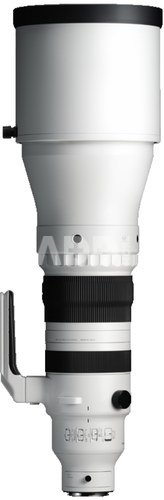
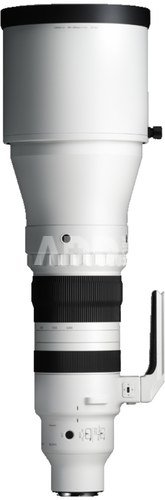
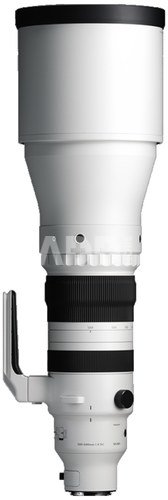
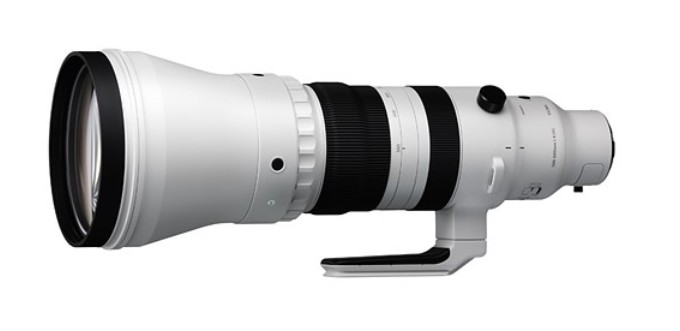
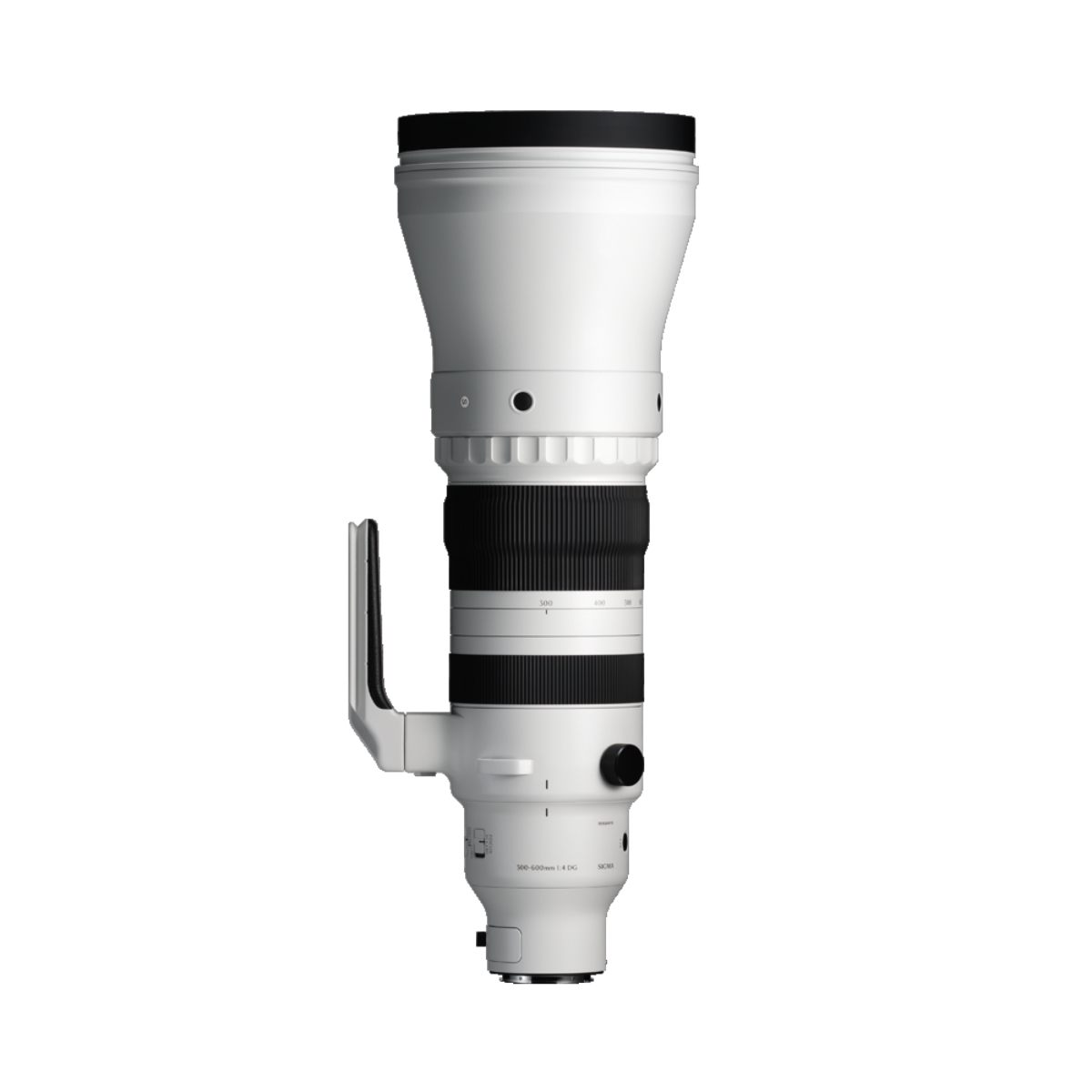
Introducing Sigma 300-600MM F4 DG OS SPORTS SONY E/FE. The Sigma 300-600mm F4 DG OS Sports is a revolutionary large-aperture ultra-telephoto zoom lens that delivers all the convenience and versatility of a zoom lens with the superior optical performance of an ultra-telephoto prime lens. With the Sigma 300-600mm F4 DG OS Sports, photographers can move freely between focal lengths of 300mm and 600mm without changing lenses. The fast and precise AF performance of its High-response Linear Actuator (HLA) and 5.5 stops* of optical stabilization at 600mm make the Sigma 300-600mm F4 DG OS Sports a powerful choice for the challenges of sports, action and wildlife photography, where situations change quickly and the opportunity for the perfect photo lasts only a few moments (* Based on CIPA guidelines (measured at a focal length of 600mm with a 35mm full-frame camera). Featuring a magnesium alloy body, thermal insulation paint and a number of additional features such as the newly added function ring, the Sigma 300-600mm F4 DG OS Sports has been designed to support professionals achieve their best shots.
EXTREMELY HIGH OPTICAL PERFORMANCE
The Sigma 300-600mm F4 DG OS Sports features 28 lens elements in 21 groups, including 6 FLD and 1 SLD glass elements, anomalous dispersion glass, and high refractive index glass. Its optical design provides excellent correction of various optical aberrations, such as chromatic aberration, throughout the entire zoom range. Although a zoom lens, the Sigma 300-600mm F4 DG OS Sports delivers the unparalleled optical performance of a prime lens.
HLA-DRIVEN HIGH-SPEED AF
Despite its large aperture of F4, the Sigma 300-600mm F4 DG OS Sports features a lightweight focus lens group thanks to the use of a high-thrust HLA (High-response Linear Actuator) motor, optimized optical power arrangement and state-of-the-art glass materials. The result is a high-speed autofocus functionality with outstanding accuracy.
POWERFUL OPTICAL STABILIZATION FUNCTION DRIVEN BY THE OS2 ALGORITHM
The Sigma 300-600mm F4 DG OS Sports delivers exceptional optical stabilization of 5.5 stops* at 600mm. Powered by Sigma’s sophisticated OS2 algorithm and featuring a drive unit with a specially designed actuator and high-precision sensor, this lens effortlessly meets the demands of a large-aperture ultra-telephoto. Additionally, photographers have the choice between two OS modes: Mode 1 is suitable for most still photography and video situations, while Mode 2 was specially designed for panning shots. Driven by Sigma’s Intelligent OS algorithm, this mode stabilizes the image during horizontal, vertical, or diagonal movements, regardless of the camera’s orientation, enabling photographers to capture moving subjects with professional precision. (* Based on CIPA guidelines. (Measured at a focal length of 600mm with a 35mm full-frame camera)).
COMBINES HIGH ROBUSTNESS AND MOBILITY
The lens barrel is made of magnesium alloy for the main parts and the hood is made of carbon, achieving both high robustness and light weight. In addition, the optical design with the center of gravity toward the camera greatly improves the weight balance, which tends to be front-heavy.
THERMAL INSULATION PAINT FOR PERFECT LENS PERFORMANCE
The exterior of the lens body is coated with a thermal insulation paint that effectively suppresses heat absorption from sunlight. This prevents the lens from heating up, even during long outdoor shoots in sunny weather, such as nature or motorsports photography.
FOCUS PRESET MODE
By turning the function ring to the left or right, the focus can be instantly shifted to a pre-registered focus position. This is useful when frequently shooting at a fixed focus position.
POWER FOCUS MODE
Focusing at a constant speed is possible by operating the function ring. This allows for smooth focus shift during movie shooting as well as for focusing with minimal movement when shooting hand-held. Focusing speed can be changed in two steps depending on the angle at which the function ring is operated.
DURABLE AND EASY-TO-HANDLE TRIPOD SOCKET
The tripod socket’s rotating mechanism uses bearings for both high durability and smooth rotation with an optional click/declick mechanism for each 90° angle to assist in accuracy. The tripod socket foot is compatible with Arca-Swiss type clamps, but can be easily removed and replaced with different interchangeable tripod sockets (available separately) to suit a variety of situations and preferences.
EQUIPPED WITH A DROP-IN FILTER HOLDER
The Sigma 300-600mm F4 DG OS Sports features a drop-in filter holder for standard ø40.5mm filters. In addition, Sigma has developed a new drop-in circular polarizing filter and a variable ND filter (available separately) that can be adjusted by approximately 7-stops while dropped into the lens.
WEATHERABILITY OF SIGMA'S SPORTS LINE SPECIFICATIONS
The mount joints, manual focus ring, zoom ring, custom switches and other control switches, and exterior joints are all protected from dust and splash by a dust- and splash-resistant structure*. Further, the frontmost surface of the lens is coated with a water- and oil- repellent coating to facilitate maintenance when water droplets or dust adhere to the lens. * The structure is designed to be dust- and splash-resistant, but not waterproof. Be careful not to bring the lens in contact with a large amount of water. Water inside the lens may cause major damage and even render the lens unrepairable.
VARIOUS FUNCTIONS TO SUPPORT SHOOTING
The lens features a variety of buttons and switches to accommodate individual preferences and the demands of different shooting situations, including AFL buttons in four different locations, a focus mode switch, a focus limiter switch, an OS mode switch (Mode 1 or Mode 2), and a custom mode switch. The L-Mount version of the lens is also compatible with Tele Converters (TC-1411/TC-2011) for AF-enabled shooting at a maximum focal length of 1,200mm.
Lens Construction: 28 elements in 21 groups (6 FLD, 1 SLD)
Angle of View: 8.2-4.1°
Number of Diaphragm Blades: 13 (rounded diaphragm)
Maximum Aperture: F4
Minimum Aperture: F22
Minimum Focusing Distance: 280(W)-450(T) cm
Maximum Magnification Ratio: 1:6 at f=470mm
Filter Size: φ40.5mm (Rear)
Dimensions (Diameter × Length): φ167.0mm x 469.9mm
Weight: 3970 g
Supplied Accessories: case, lens hood LH1615-01, cover lens cap LC-598E, rear cap LCR III, shoulder strap, tripod socket TS-161, drop in filter holder RFH-21
Type
zoom
Typ of SensorFull frame
Focal length (wide)
300 mm
Discuss with a consultant in Kaunas
We don't haveKlaipėdaAddress: Birželio 23-iosios g. 23gWorking hours: I-V 09:00 - 18:00VI-VII not workingPhone: +370 674 59488
Discuss with a consultant in Klaipėda
We don't haveKlaipėdaAddress: Taikos pr. 17Working hours: I-V 10:00 - 19:00VI 10:00 - 14:00VII not workingPhone: +370 604 43972
1. How to choose the right lens for a mirrorless camera?
When choosing the right lens for a mirrorless camera, it is important to consider your photography needs and style. First, decide on the resolution and focusing distance you require. For portraits, lenses with a wide aperture, such as a 50mm f/1.8, are often preferred. If you enjoy landscapes, go for a wide-angle lens (e.g., 24mm). To capture distant objects, telephoto lenses (e.g., 70-200mm) are useful. Another important factor is the lens’s light-gathering ability, which affects performance in low-light conditions. A stabilization system can also be important, especially for longer lenses. It’s important to evaluate the build quality of the lens and the manufacturer's reputation. Try out several lenses and consider your future needs to choose the right and long-lasting investment in your photography.
2. Are all lenses compatible with all mirrorless cameras?
Not all lenses are universal for all mirrorless cameras. Different manufacturers may have different mounts, so it is important to check the lens compatibility with your camera. For example, lenses for Canon, Nikon, Sony, and other manufacturers' mirrorless cameras may not be interchangeable without adapters. It is also important to consider the sensor size. APS-C lenses may be disproportionately large for full-frame cameras. Before purchasing a lens, it is advisable to check the manufacturer's compatibility chart and consider the specific requirements of your camera. Adapters can allow the use of third-party lenses, but there may be some loss in functionality or quality.
The website uses cookies, which help you ensure quality of service. Continuing browsing, you agree with fotoaparatas.lt cookies policy.Agree




















Reviews
0 average rating (0 votes)