DescriptionSigma 28-105mm f/2.8 DG DN Art Sony E description
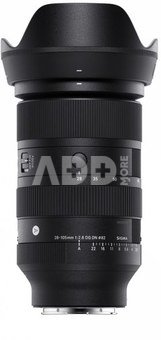
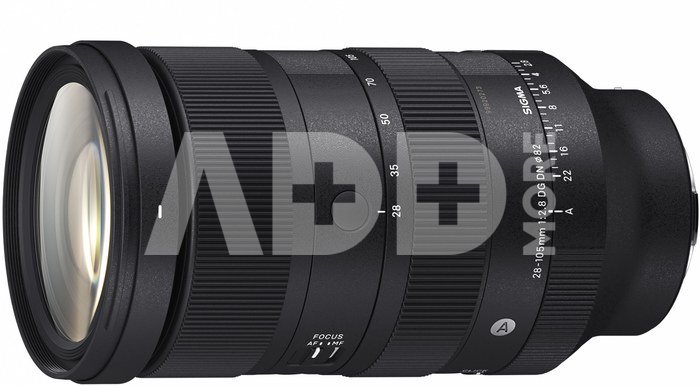
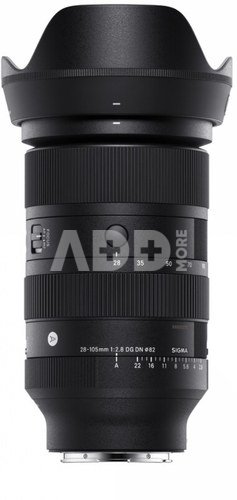
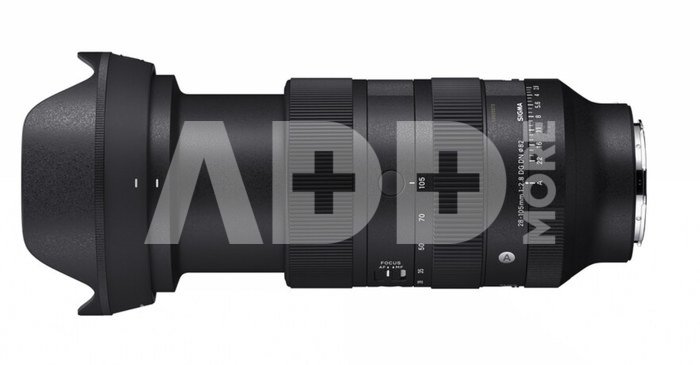
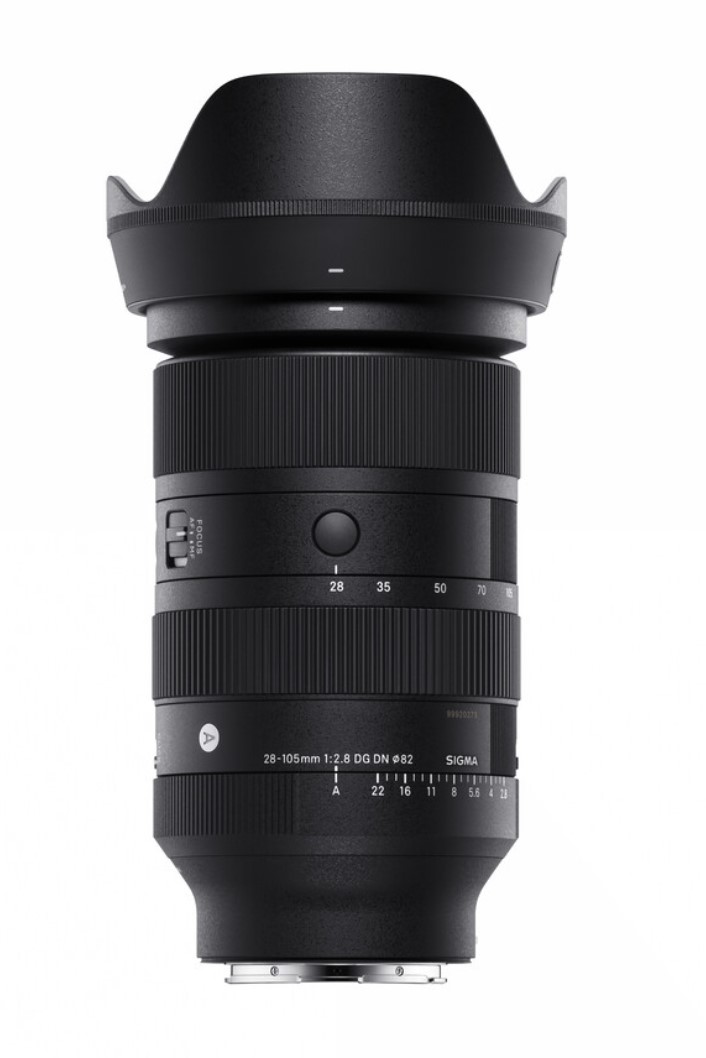
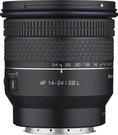
Sigma 28-105mm f/2.8 DG DN Art Sony E - this is a zoom lens for full-frame mirrorless camera systems. Spanning many popular focal lengths in a single fast-aperture zoom, this is an exciting addition to the product line. The Sigma 28-105mm f/2.8 DG DN Art is a surprisingly compact, full-frame, wide-angle to telephoto zoom lens with a fast constant aperture. This lens covers several popular focal lengths from 28mm to 105mm, including the very popular 85mm focal length for portraiture, remaining at f/2.8 through the entire range.
CONSTANT F2.8 APERTURE ACROSS A VERSATILE 28-105MM ZOOM
Many conventional zoom lenses which have a reach up to 105mm do not offer a constant f/2.8 aperture, usually dropping to F4 at the long end. But the SIGMA 28-105mm f/2.8 DG DN Art delivers the same impressive light-gathering and depth-of-field benefits across the whole focal range. The lens offers all of this along with extremely high optical performance thanks to the thorough suppression of optical aberrations within each lens group. And with its outstanding close-focusing capability when zoomed in, macro-style results are also possible.
A VERSATILE F2.8 APERTURE PERFECT FOR PORTRAITS AND LOW LIGHT
With its fast aperture across the whole focal range, the SIGMA 28-105mm f/2.8 DG DN Art is a true workhorse lens that can be used for almost any type of photography. Scenic photographers can shoot wide-angle landscapes, using the F2.8 aperture for low-light scenes and twilight urban views, while the middle focal lengths tackle dimly lit documentary and street subjects, allowing shutter speeds one stop faster than comparable lenses. At the long end, popular portrait focal lengths from 85mm and 105mm, combined with the F2.8 maximum aperture, produce a shallow depth-of-field that will isolate a subject impressively against large and beautiful bokeh.
FILL THE FRAME WITH SUPERB CLOSE-UP PERFORMANCE
Achieving a minimum focus distance of just 40 cm across its entire zoom range, the Sigma 28-105mm f/2.8 DG DN Art can get you closer to your subject, filling the frame with detail and texture. At its 105mm setting, this creates a very useful maximum magnification ratio of 1:3.1 for powerful macro-style results.
SUPERIOR OPTICAL PERFORMANCE ACROSS THE FULL ZOOM AND FOCUS RANGE
The Sigma 28-105mm f/2.8 DG DN Art operates without compromise, suppressing aberrations very effectively within each lens group, and throughout the entire zoom and focal range. This ensures the lens has a consistent performance even with such a long zoom range. This is thanks to the lens’s premium optical design, which includes two FLD, one SLD and five aspherical elements, the first grouping of which uses a large-diameter ø66.4mm element that is extremely difficult to produce and only available thanks to SIGMA’s advanced manufacturing technology at its sole production base in Aizu, Japan.
DESIGNED TO MINIMIZE FLARE AND GHOSTING
Using advanced simulation technology, flare and ghosting have been largely eliminated, ensuring that the lens renders rich, high-contrast results in all conditions. In addition, SIGMA’s Nano Porous Coating and Super Multi-Layer Coating have been applied to further suppress flare and ghosting.
MINIMAL FOCUS BREATHING
Vital for film-makers who demand consistent framing, the lens has been designed to keep focus breathing to a minimum. This ensures that any changes to the angle-of-view due to focus shift are minimized across the entire zoom range, ensuring natural-looking focus pulls when recording video, and easier image alignment when focus stacking.
SUPERB PORTABILITY THANKS TO A WEIGHT OF LESS THAN 1 KG
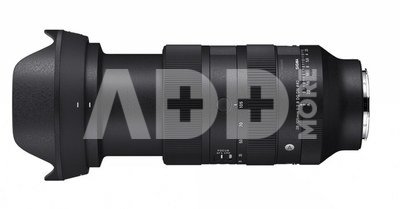
Standard zooms should be small and light enough for all-day hand-held shooting, so the Sigma 28-105mm f/2.8 DG DN Art has been designed with portability in mind. It combines five aspherical elements effectively in place to shorten the overall length, and a magnesium-alloy construction around the mount, keeping the weight of the lens to less than 1kg. This ensures the lens has superb portability similar to shorter standard zoom lenses, while providing a wider zoom range.
EXCELLENT OPTICAL PERFORMANCE
By using five aspherical elements in its optical construction, SIGMA has succeeded in significantly shortening the lens’s total length without any compromise to sharpness and image quality. This advanced configuration was only made possible by continuous technological innovation and cutting-edge manufacturing processes at SIGMA’s sole production base in Aizu, Japan.
SMARTER DESIGN MEANS LOWER WEIGHT
Constant f/2.8 zoom lenses can be heavy, but by optimising the design and materials of each part of the Sigma 28-105mm f/2.8 DG DN Art, Sigma has achieved a remarkably light weight of less than 1kg. The use of magnesium-alloy rather than aluminum for the lens barrel around the mount has reduced the weight of these parts alone by two-thirds, while ensuring rigidity.
PROFESSIONAl FEATURES, FAST AF AND EXCELLENT BUILD QUALITY
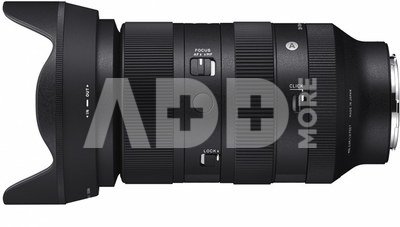
In addition to high-speed AF delivered by its linear motor HLA (High-response Linear Actuator), the Sigma 28-105mm f/2.8 DG DN Art packs in a range of features that help deliver the best possible results in every shooting situation. These include a dust- and splash-resistant structure and water- and oil-repellent coating, as well as a zoom lock switch, a de-clickable aperture ring, AFL buttons and the focus ring for easier handling including shooting with MF.
A LINEAR MOTOR HLA FOR RAPID AND ACCURATE AF
The lens incorporates a linear motor HLA (High-response Linear Actuator) that delivers a maximum drive speed, ensuring responsive, precise and smooth AF. With its high level of quietness, the motor also provides noise-free video capability.
AN APERTURE RING FOR IMPROVED ERGONOMICS
For quick changes to exposure, or a more traditional way of shooting, the lens is equipped with a dedicated aperture ring, allowing the user to change aperture via the lens if preferred. An aperture ring click switch is a useful tool for film-makers, and a lock switch helps ensure the aperture ring is not knocked out of its setting accidentally.
SPECIFICATIONS
Lens mount: Sony E
Focal length: 28-105 mm
Lens construction: 18 elements in 13 groups (2 FLD, 1 SLD, 5 aspherical elements)
Angle of View: 75.4° - 23.3°
Number of diaphragm blades: 12 (rounded diaphragm)
Minimum focusing distance: 40 cm
Maximum aperture: f/2.8
Minimum aperture: f/22
Maximum magnification ratio: 1:3.1 at f=105mm
Filter diameter: ø82 mm
Dimensions: ø87.8 mm × 159.9 mm
Weight: 990 g
Lens mount (bayonet)
Sony E
Typ of SensorFull frame
Focal length (wide)
28 mm
Discuss with a consultant in Kaunas
We don't haveKlaipėdaAddress: Birželio 23-iosios g. 23gWorking hours: I-V 09:00 - 18:00VI-VII not workingPhone: +370 674 59488
Discuss with a consultant in Klaipėda
We don't haveKlaipėdaAddress: Taikos pr. 17Working hours: I-V 10:00 - 19:00VI 10:00 - 14:00VII not workingPhone: +370 604 43972
1. How to choose the right lens for a mirrorless camera?
When choosing the right lens for a mirrorless camera, it is important to consider your photography needs and style. First, decide on the resolution and focusing distance you require. For portraits, lenses with a wide aperture, such as a 50mm f/1.8, are often preferred. If you enjoy landscapes, go for a wide-angle lens (e.g., 24mm). To capture distant objects, telephoto lenses (e.g., 70-200mm) are useful. Another important factor is the lens’s light-gathering ability, which affects performance in low-light conditions. A stabilization system can also be important, especially for longer lenses. It’s important to evaluate the build quality of the lens and the manufacturer's reputation. Try out several lenses and consider your future needs to choose the right and long-lasting investment in your photography.
2. Are all lenses compatible with all mirrorless cameras?
Not all lenses are universal for all mirrorless cameras. Different manufacturers may have different mounts, so it is important to check the lens compatibility with your camera. For example, lenses for Canon, Nikon, Sony, and other manufacturers' mirrorless cameras may not be interchangeable without adapters. It is also important to consider the sensor size. APS-C lenses may be disproportionately large for full-frame cameras. Before purchasing a lens, it is advisable to check the manufacturer's compatibility chart and consider the specific requirements of your camera. Adapters can allow the use of third-party lenses, but there may be some loss in functionality or quality.
The website uses cookies, which help you ensure quality of service. Continuing browsing, you agree with fotoaparatas.lt cookies policy.Agree

























Reviews
0 average rating (0 votes)