DescriptionTamron 35-100mm F/2.8 Di III VXD Nikon Z description
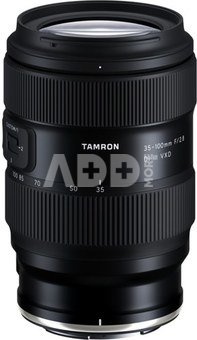
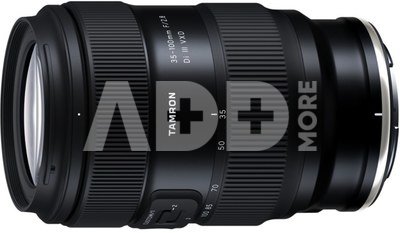
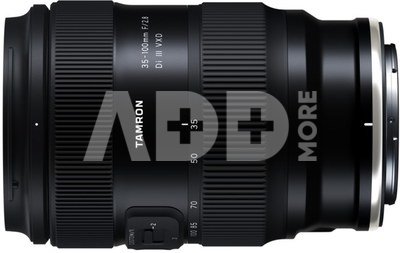
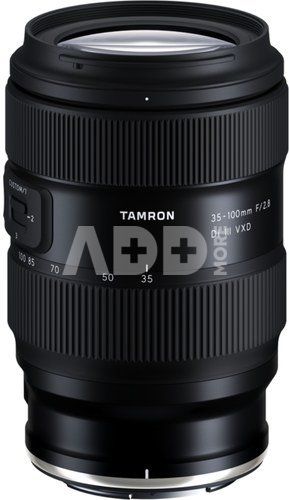
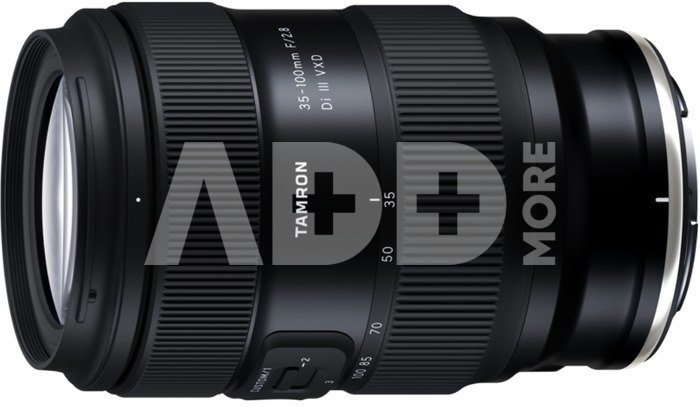
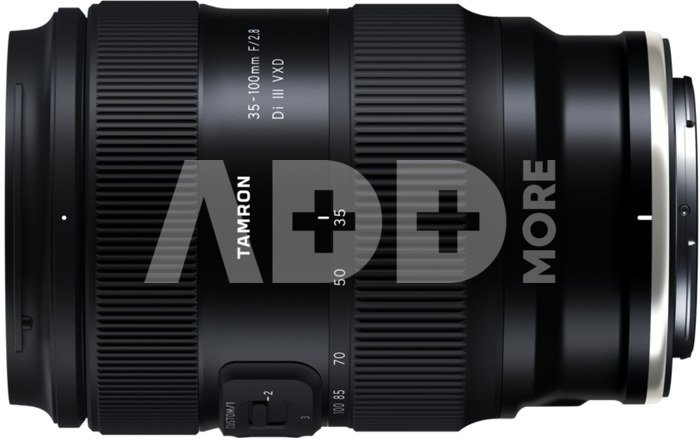
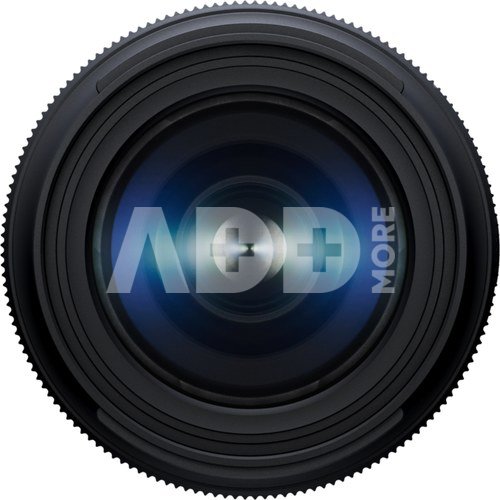
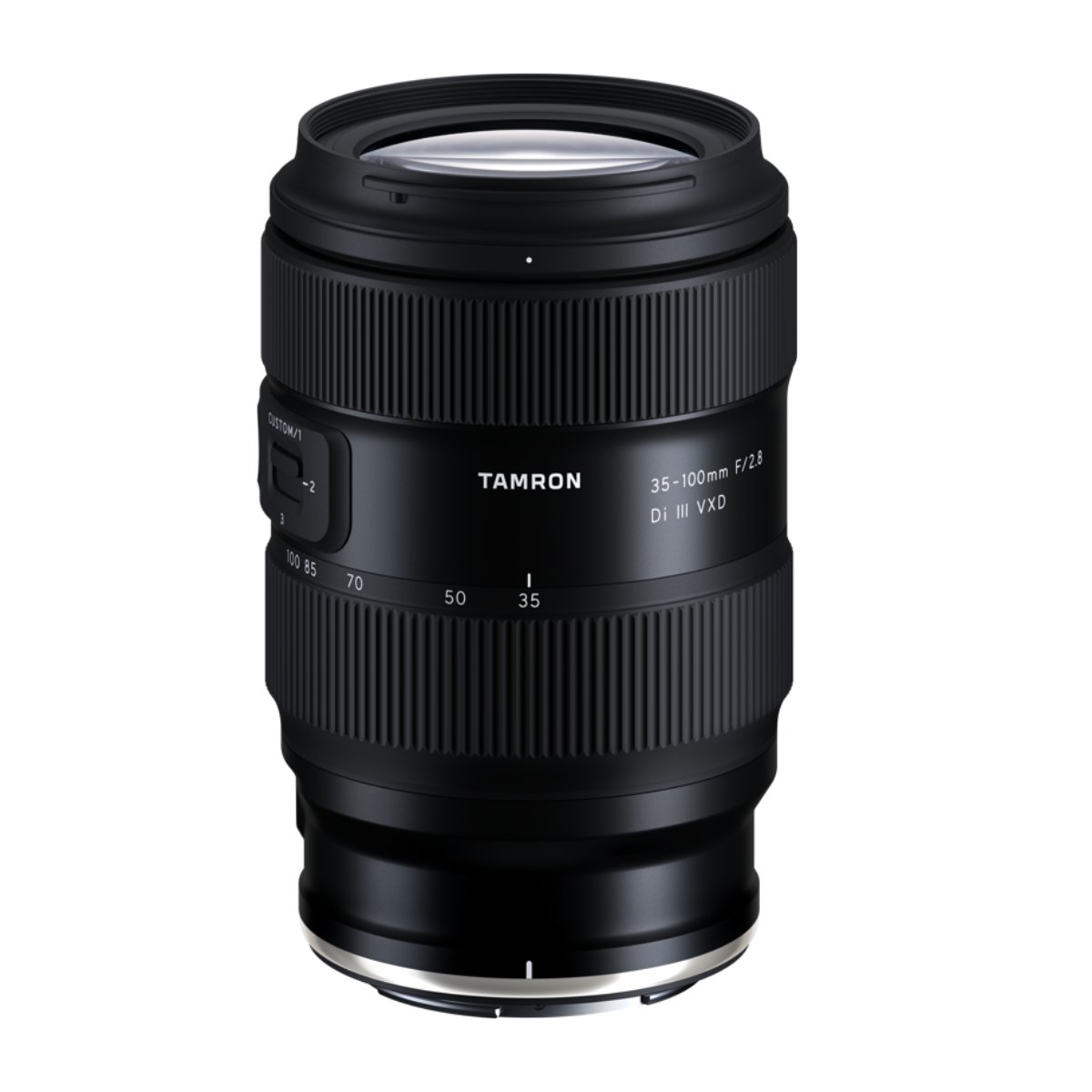
Tamron 35-100mm F/2.8 Di III VXD Nikon Z - covering from semi wide-angle to medium telephoto, this lens offers the flexibility to shoot everything from wide compositions that make use of the background to head-and-shoulders portraits that capture the subject’s expression. Following feedback on the 35-150mm F2-2.8, the 35-100mm F2.8 was designed with portability as the top priority. Measuring just 121.5 mm in length and weighing 575 g, it achieves exceptional compactness. This was achieved through a multifaceted approach: optimizing the switch section and internal structure, refining component shapes, carefully reviewing the optical design, all while ensuring high rigidity. While maintaining its unique focal length of 35-100mm and the bright constant aperture F2.8, it combines portability with reliability. Thus, it’s perfect for everything from candid portraits to travel snapshots. Additionally, the minimized barrel extension stabilizes the center of gravity during zooming, ensuring steady operation for handheld shooting and gimbal-mounted video work.
HIGH RESOLUTION AND RICH BOKEH – RENDERING SKIN TEXTURE WITH CLARITY
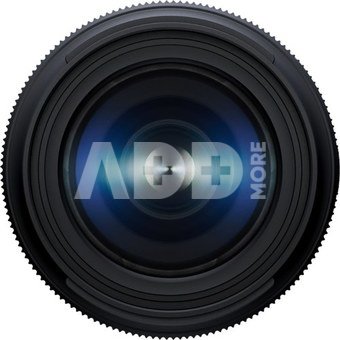
Despite its compact size, the 35-100mm F2.8 achieves clear and detailed images. The optical design, with 15 elements in 13 groups, includes one XLD (eXtra Low Dispersion), two LD (Low Dispersion), and three GM (Glass Molded Aspherical) lens elements. These suppress various aberrations, including chromatic aberration, delivering high resolving power throughout the zoom range. Furthermore, the BBAR-G2 (Broad-Band Anti-Reflection Generation 2) Coating minimizes ghosting and flare even in backlit conditions. Combined with the soft bokeh from the F2.8 aperture, this lens renders portraits and travel scenes with stunning clarity.
HIGH-SPEED, HIGH-PRECISION AF TO RELIABLY CAPTURE NATURAL EXPRESSIONS
Equipped with TAMRON’s fastest, most precise VXD (Voice-coil eXtreme-torque Drive) linear motor focus mechanism, the 35-100mm F2.8 captures natural expressions with ease, whether for candid family portraits or travel snapshots. Its excellent tracking performance is suitable even for the unpredictable movements of children/pets. Additionally, its quiet operation is ideal for both stills and video in noise-sensitive environments.
CLOSE-UP CREATIVITY – IDEAL FOR INDOOR PHOTOGRAPHY
With an MOD (Minimum Object Distance) of 0.22 m at the wide end (maximum magnification ratio 1:3.3), this lens allows you to get close to your subject. Ideal for tabletop photography in cafes and indoor spaces, it transforms everyday scenes into artistic images, enhanced by the F2.8 aperture's bokeh.
67mm FILTER SIZE
Most TAMRON mirrorless lenses feature a 67mm filter size, allowing shared use of expensive PL or ND filters and eliminating the hassle of switching lens caps. All lenses are compact, lightweight and extremely portable, ideal for multi-lens shooting.
SPECIFICATIONS
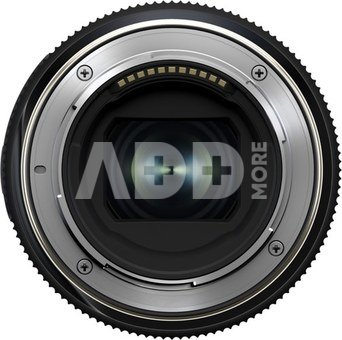
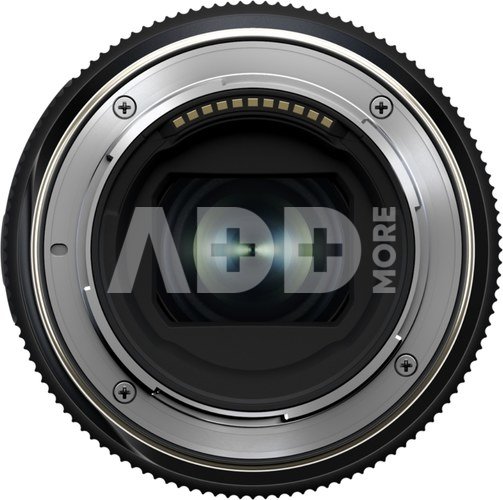
Lens Mount: Nikon Z
Focal Length: 35-100 mm
Maximum Aperture: F2.8
Minimum Aperture: F22
Angle of View (diagonal): 63°26′- 24°25′(for full-frame mirrorless format)
Optical Construction: 15 elements in 13 groups
Minimum Object Distance: 0.22 m (WIDE), 0.65 m (TELE)
Maximum Magnification Ratio: 1:3.3 (WIDE) / 1:5.9 (TELE)
Filter Size: Φ67 mm
Maximum Diameter: Φ80.6 mm
Length: 121.5 mm
Weight: 575 g
Aperture Blades: 9 (circular diaphragm)
Standard Accessories: Flower-shaped hood, Front cap, Rear cap
Lens mount (bayonet)
Nikon Z mount
Focal length (wide)
35 mm
Focal length (tele)
100 mm
Discuss with a consultant in Kaunas
We don't haveKlaipėdaAddress: Birželio 23-iosios g. 23gWorking hours: I-V 09:00 - 18:00VI-VII not workingPhone: +370 674 59488
Discuss with a consultant in Klaipėda
We don't haveKlaipėdaAddress: Taikos pr. 17Working hours: I-V 10:00 - 19:00VI 10:00 - 14:00VII not workingPhone: +370 604 43972
1. How to choose the right lens for a mirrorless camera?
When choosing the right lens for a mirrorless camera, it is important to consider your photography needs and style. First, decide on the resolution and focusing distance you require. For portraits, lenses with a wide aperture, such as a 50mm f/1.8, are often preferred. If you enjoy landscapes, go for a wide-angle lens (e.g., 24mm). To capture distant objects, telephoto lenses (e.g., 70-200mm) are useful. Another important factor is the lens’s light-gathering ability, which affects performance in low-light conditions. A stabilization system can also be important, especially for longer lenses. It’s important to evaluate the build quality of the lens and the manufacturer's reputation. Try out several lenses and consider your future needs to choose the right and long-lasting investment in your photography.
2. Are all lenses compatible with all mirrorless cameras?
Not all lenses are universal for all mirrorless cameras. Different manufacturers may have different mounts, so it is important to check the lens compatibility with your camera. For example, lenses for Canon, Nikon, Sony, and other manufacturers' mirrorless cameras may not be interchangeable without adapters. It is also important to consider the sensor size. APS-C lenses may be disproportionately large for full-frame cameras. Before purchasing a lens, it is advisable to check the manufacturer's compatibility chart and consider the specific requirements of your camera. Adapters can allow the use of third-party lenses, but there may be some loss in functionality or quality.
The website uses cookies, which help you ensure quality of service. Continuing browsing, you agree with fotoaparatas.lt cookies policy.Agree


















Reviews
0 average rating (0 votes)