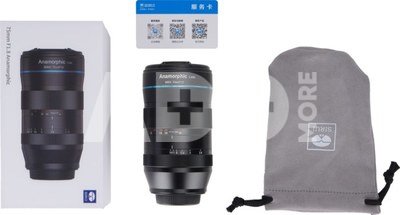
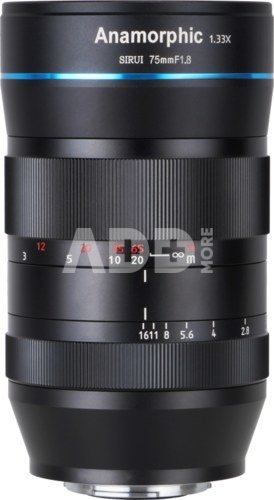
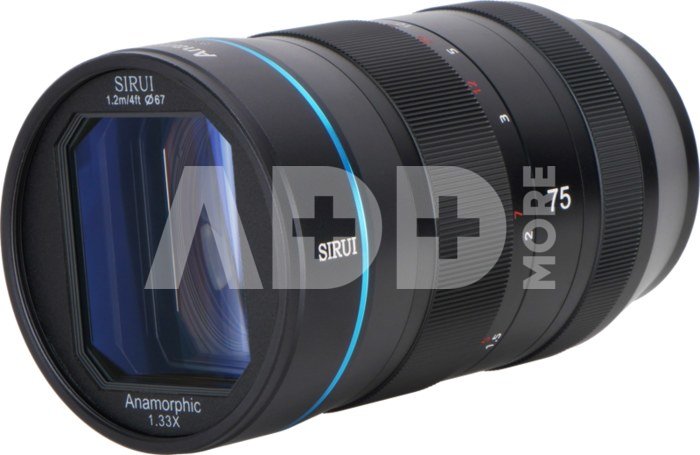
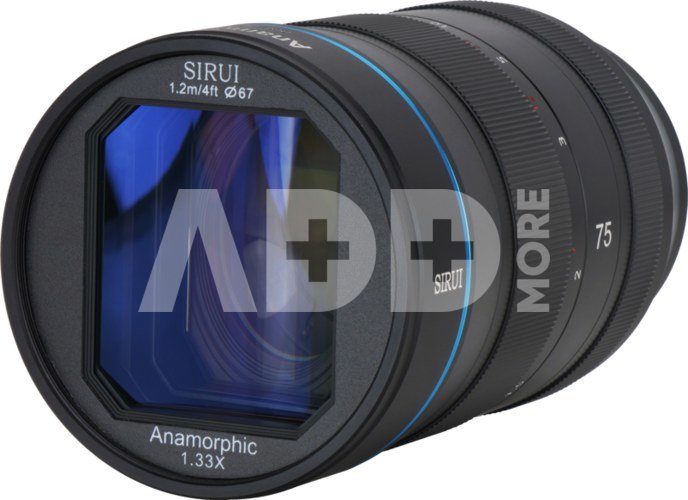
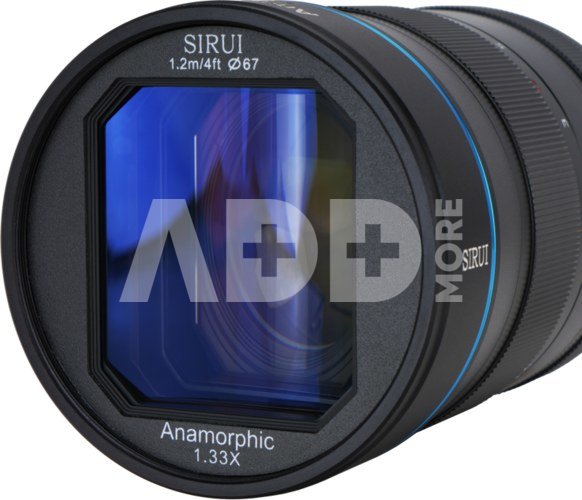
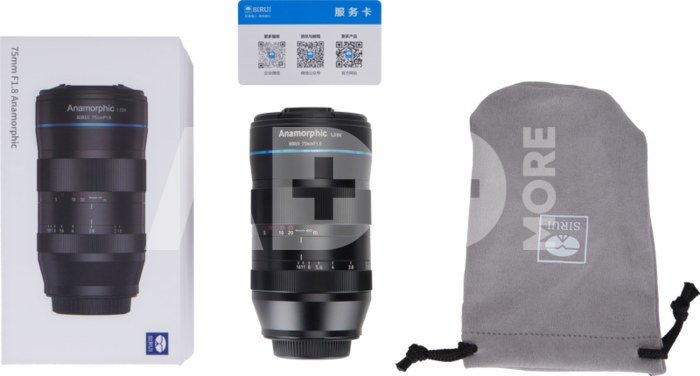
SIRUI ANAMORPHIC LENS 1,33X 75MM F/1.8 E-MOUNT
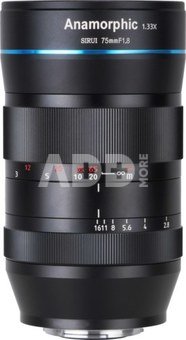
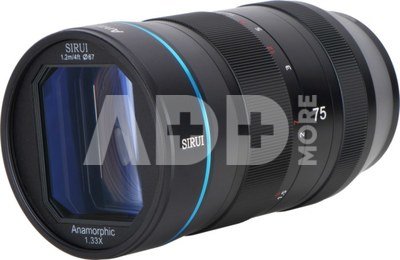
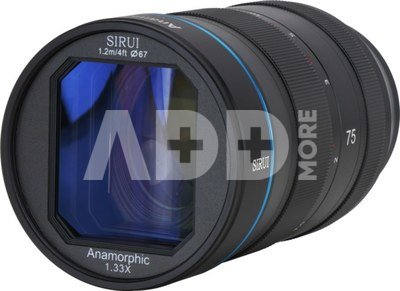
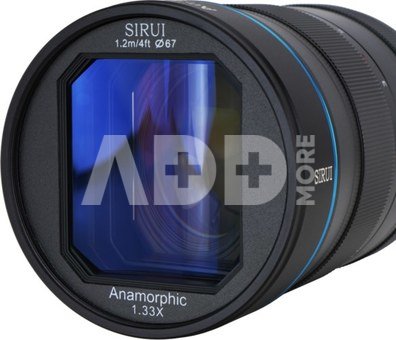
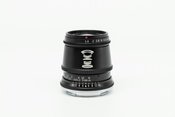
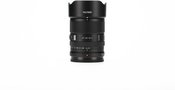
Sirui Anamorphic Lens 1,33x 75mm f/1.8 With a 33% increase of the horizontal field of view, SIRUI 75mm Anamorphic lens producesvideos in a 2.4:1 aspect ratio, delivering you a cinematic visual feast. A longer focal lengthcan handle subtle expressions better. Together with its siblings, this lens is about toredefine what cinematic art is.With the 1.33X squeeze factor and a longer focal length, SIRUI 75mm Anamorphiclens is a veritable portrait master. By eliminating obvious perspective distortion,characters are presented in a more natural way, as if seeing right through youreyes. The lens is good at filling the frame with the subject and throwing the backgroundout of focus. Also, the sharp and high-resolution imaging contributes to thedepiction of subtle emotions. The 75mm lens has got what it takes to produce a cinematicblockbuster high-quality images, natural and saturated blue lensflares as well as elliptical bokeh. The Fast F1.8 aperture and theenhanced shutter speed have the Anamorphic look highlighted aswell. The 75mm focal length excels at revealing overlooked details in a chaotic scene,providing a fresh and unique perspective for story interpretation. Spatialcompression created by this lens narrows the distance between the backgroundand the subject, delivering a compact yet plump effect. This lens is available in five different mounts MFT (art no 116921) Sony E (art no 116919) Fuji X (art no 116922) Nikon Z (art no 116923) Canon EF-M (art no 116920)
Typ of Sensor
APS-C
Image stabilization
Nėra
Delivery time
5-19 w.d.
Discuss with a consultant in Kaunas
We don't have
Klaipėda Address: Birželio 23-iosios g. 23g Working hours: I-V 09:00 - 18:00 VI-VII not working Phone: +370 674 59488
Discuss with a consultant in Klaipėda
We don't have
Klaipėda Address: Taikos pr. 17 Working hours: I-V 10:00 - 19:00 VI 10:00 - 14:00 VII not working Phone: +370 604 43972
1. How to choose the right lens for a mirrorless camera?
When choosing the right lens for a mirrorless camera, it is important to consider your photography needs and style. First, decide on the resolution and focusing distance you require. For portraits, lenses with a wide aperture, such as a 50mm f/1.8, are often preferred. If you enjoy landscapes, go for a wide-angle lens (e.g., 24mm). To capture distant objects, telephoto lenses (e.g., 70-200mm) are useful. Another important factor is the lens’s light-gathering ability, which affects performance in low-light conditions. A stabilization system can also be important, especially for longer lenses. It’s important to evaluate the build quality of the lens and the manufacturer's reputation. Try out several lenses and consider your future needs to choose the right and long-lasting investment in your photography.
2. Are all lenses compatible with all mirrorless cameras?
Not all lenses are universal for all mirrorless cameras. Different manufacturers may have different mounts, so it is important to check the lens compatibility with your camera. For example, lenses for Canon, Nikon, Sony, and other manufacturers' mirrorless cameras may not be interchangeable without adapters. It is also important to consider the sensor size. APS-C lenses may be disproportionately large for full-frame cameras. Before purchasing a lens, it is advisable to check the manufacturer's compatibility chart and consider the specific requirements of your camera. Adapters can allow the use of third-party lenses, but there may be some loss in functionality or quality.















Reviews
0 average rating (0 votes)