DescriptionPanasonic Lumix S 100-500mm F/5.0-7.1 OIS description
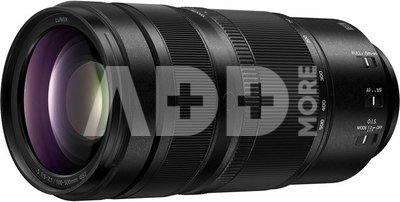
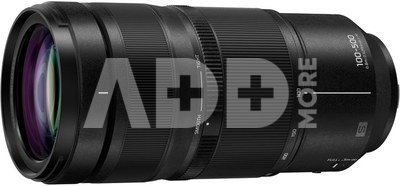
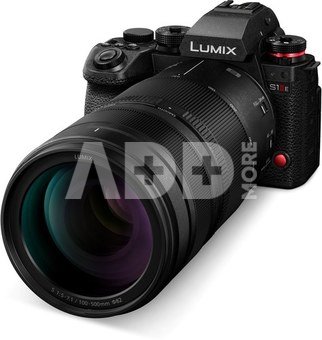
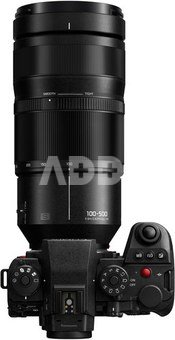
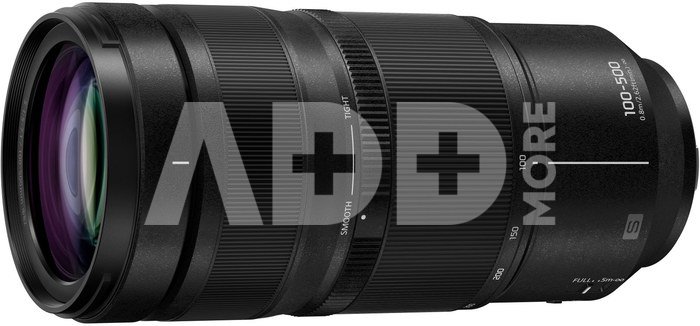
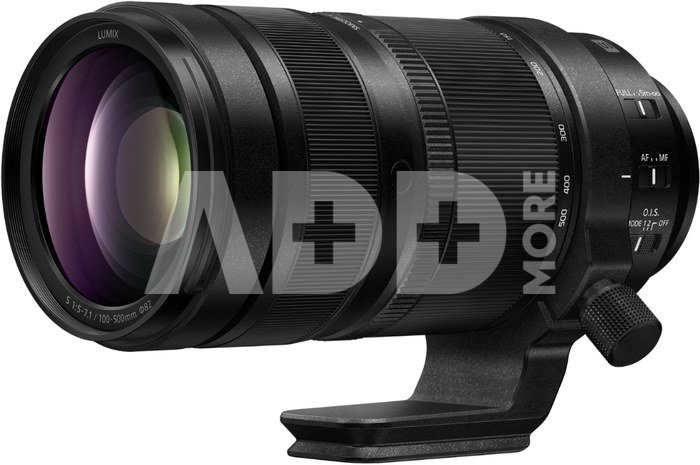
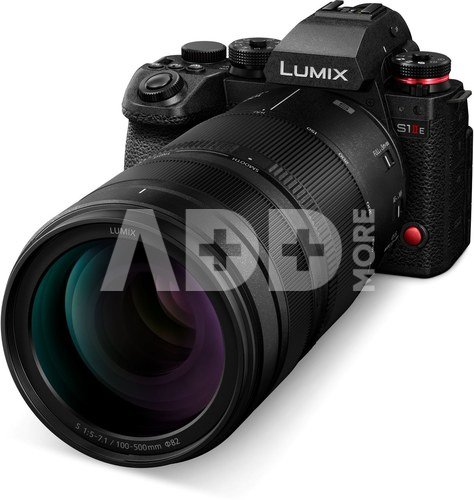
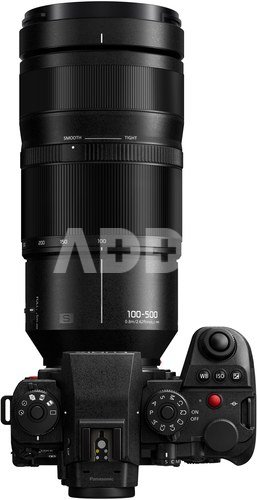
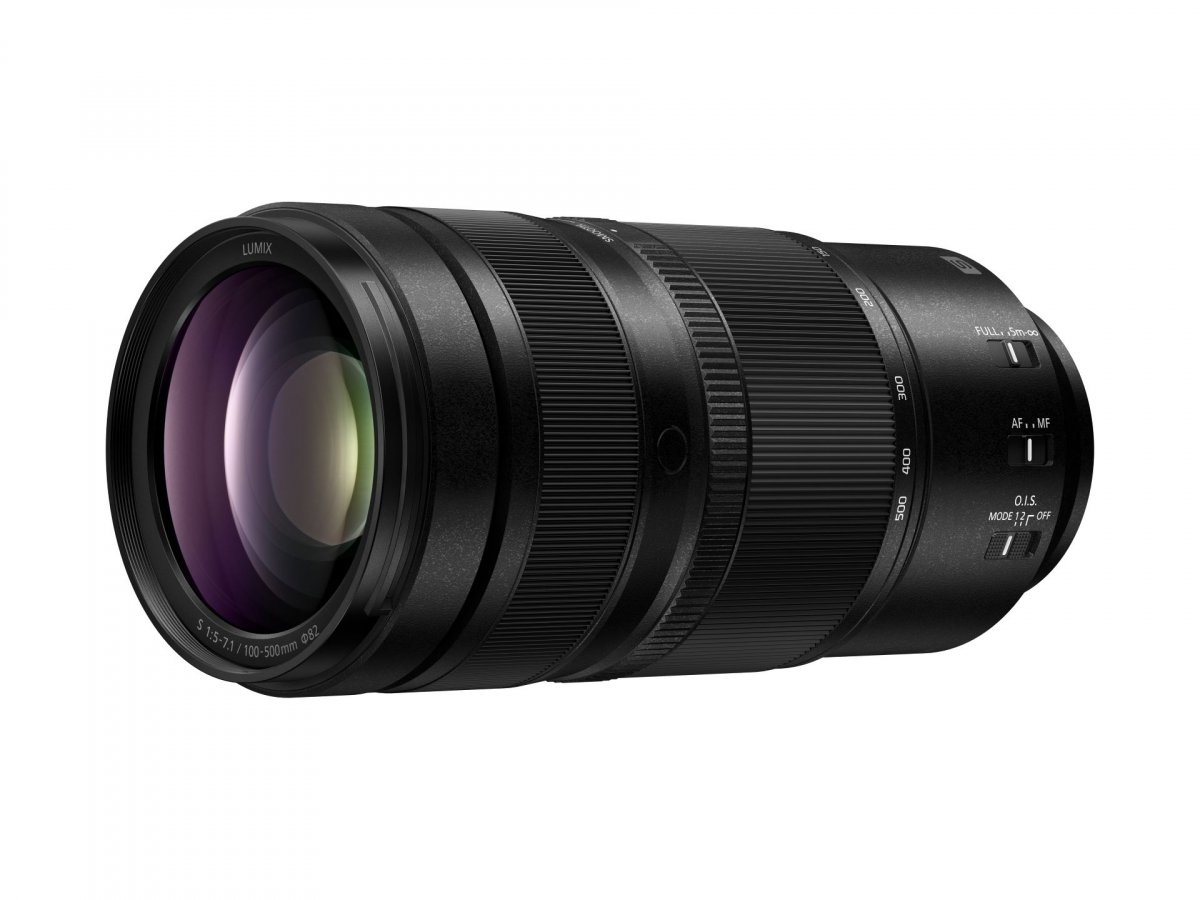
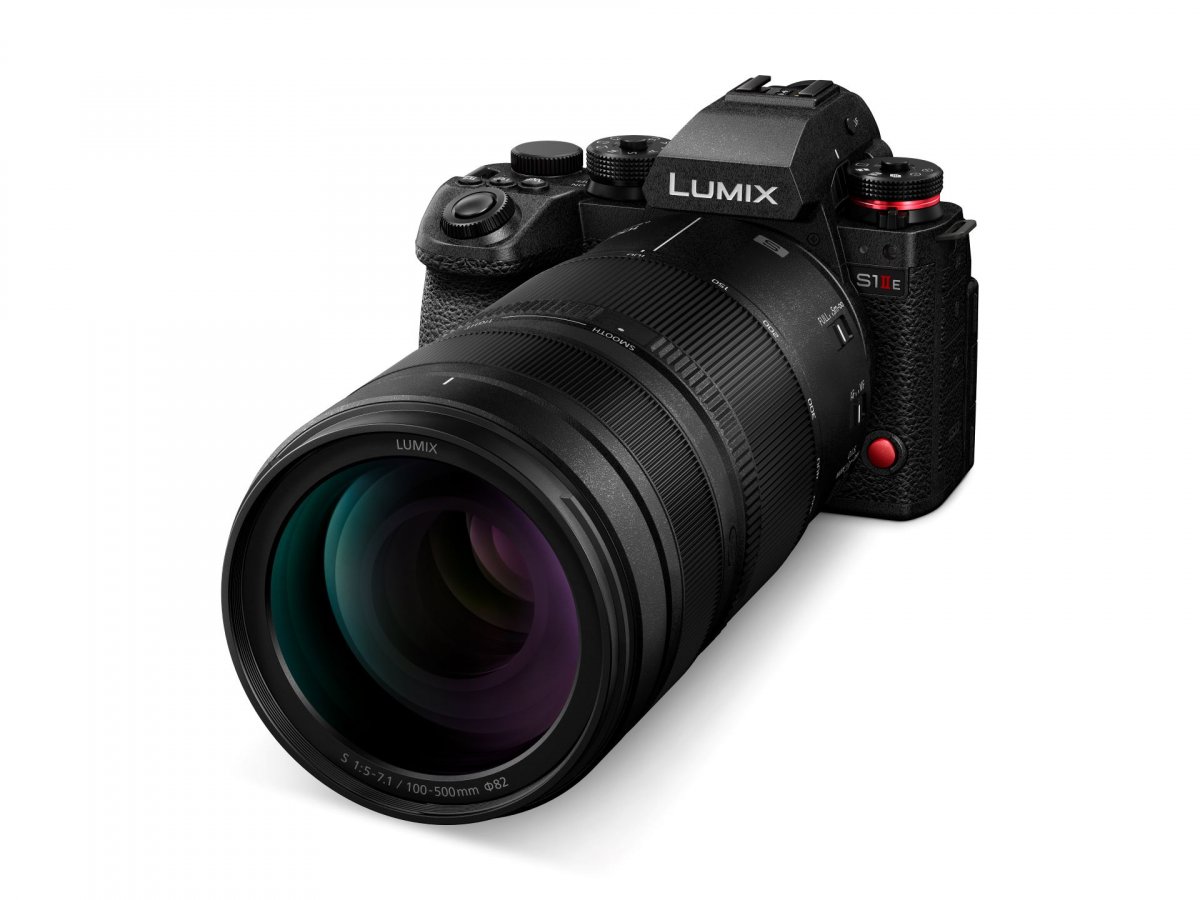
Panasonic Lumix S 100-500mm F/5.0-7.1 OIS. This lens covers a focal length from 100 to 500mm and supports teleconverters, enabling telephoto shooting of up to 1000mm. It delivers high resolution and beautiful bokeh across the entire zoom range, to capture stunning images and footage in a wide variety of shooting scenarios including wildlife, motorsports, and landscapes. With an optimized lens element arrangement and Dual Phase Linear Motor, the lens achieves a remarkably compact design, while delivering impressive ultra-telephoto performance. High-speed, high-precision, and silent autofocus, combined with Dual I.S. 2 image stabilization supporting up to 7.0 stops, ensures exceptional portability and handheld shooting support. The lens is also designed for intuitive operation, featuring a customizable focus ring and a focus button. To meet the growing demand for video production, the lens incorporates features such as focus breathing suppression and micro-step aperture control for smooth exposure transitions, supporting high-quality video performance.
THE FIRST*1 ULTRA-TELEPHOTO ZOOM LENS IN THE LUMIX S SERIES COVERING UP TO 500mm
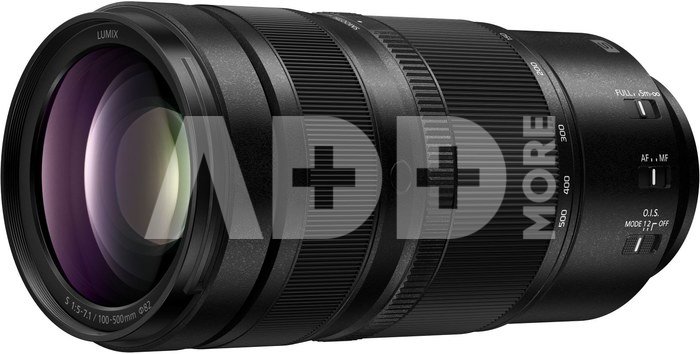
Maintains high resolution across the entire zoom range, delivering sharp detail and beautiful bokeh even at maximum aperture. Covers focal lengths from 100mm to 500mm; compatible with lens teleconverters*2 (sold separately) for ultra-telephoto shooting up to 1000mm. (*1 As of September 24, 2025. Among interchangeable lenses for AF compatible full-frame mirrorless cameras). (*2 With optional teleconverter DMW-STC20 attached. The maximum aperture becomes two stops slower. When a teleconverter is attached, the focal length of this lens is limited to 150–500mm).
POWERFUL 7.0-STOP DUAL I.S. 2 FOR UNSHAKABLE STABILITY AND ENHANCED MOBILITY
Achieves highly effective image stabilization with 7.0-stop*3 Dual I.S. 2. Ultra-telephoto zoom reaches in a remarkably compact 196.1mm design. High-speed, high-precision AF powered by a Dual Phase Linear Motor. (*3 Based on the CIPA standard [Yaw/Pitch direction: focusing distance f=500mm. When LUMIX S1RII is used.]).
INTUITIVE OPERABILITY FOR FOCUSED SHOOTING
Focus ring can be assigned to control shooting settings such as aperture (Control Ring function) *4. Focus button can be assigned to support intuitive operations such as Hybrid Zoom*5. (*4 Compatible cameras: DC-S1M2, DC-S1M2ES, DC-S1RM2 (Firmware version 1.2). (*5 This function combines optical zoom and crop zoom, allowing you to extend the telephoto range using only the zoom ring without changing the focal length at the wide end.).
FEATURES
- Super telephoto zoom – 100-500mm, F5-7.1; supports teleconverter, enabling up to 1000mm focal length
- Image stabilization – Achieves highly effective image stabilization with 7.0-stop Dual I.S. 2
- Compact design – Ultra-telephoto zoom reaches in a remarkably compact 196.1mm design
- High-speed AF – high-precision AF powered by a Dual Phase Linear Motor
- Ideal for video – Suppression of focus breathing silent focusing
- Toughness – Dust-, splash and freeze resistant
SPECIFICATIONS
Mount: L-Mount
Focal length: 100-500mm (up to 1000mm with teleconverter (sold seperately))
Maximum aperture: F5 (Wide) – F7.1 (Tele)
Minumal aperture: F29 (Wide) – F40 (Tele)
Diagonal angle of view: 24°(Wide) - 5.0°(Tele)
Aperture type: 11 diaphragm blades / Circular aperture diaphragm
Closest focussing distance W: 0,8m / T: 1,5m
Maximum magnification: W: 0,16x / T: 0.36x
Lens construction: 19 elements in 12 groups (2 UED lens, 2 ED lenses, 2 UHR lenses)
Image stabilisation: O.I.S / DUAL IS compatible (up to 7 stops* at tele*) (*Based on the CIPA standard [Yaw/Pitch direction: focusing distance f=500mm. When DC)
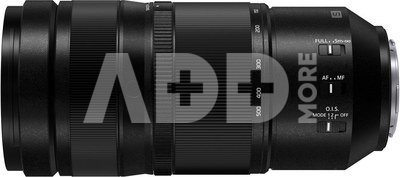
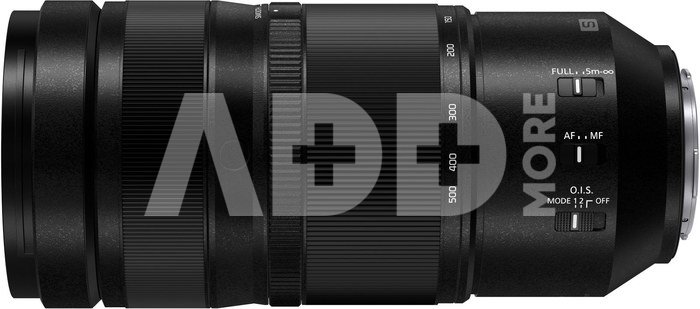
Other features: Customizable Focus Ring, Tight-Smooth Ring, Focus Button (Fn Button), Focus Limiter Switch, AF/MF Switch, O.I.S. Switch, Zoom Limit Switch
Dust, splash and freeze resustant: yes / yes / yes (-10°C to 40°C)
Filter size: 82 mm
Size: 92,0 x 196,1 mm
Weight: 1285 g
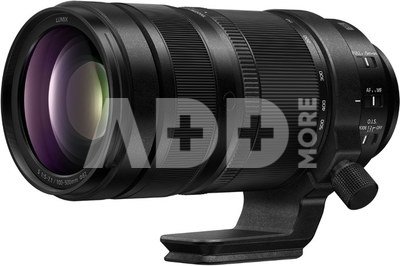
Standard accessories: Lens cap, lens rear cap, lens hood, tripod mount
Lens mount (bayonet)
L-mount
Type
zoom
Typ of SensorFull frame
Discuss with a consultant in Kaunas
We don't haveKlaipėdaAddress: Birželio 23-iosios g. 23gWorking hours: I-V 09:00 - 18:00VI-VII not workingPhone: +370 674 59488
Discuss with a consultant in Klaipėda
We don't haveKlaipėdaAddress: Taikos pr. 17Working hours: I-V 10:00 - 19:00VI 10:00 - 14:00VII not workingPhone: +370 604 43972
Specification
Producer(?)
Link to the official manufacturer website
Panasonic
Lens mount (bayonet)
L-mount
Type
zoom
Typ of Sensor
Full frame
Focal length (wide)
100 mm
Focal length (tele)
500 mm
Max Aperture
5 F
Min aperture
40 F
Diagonal Angle of View
24 °
Minimum Focus
80 cm
Image stabilization
O.I.S / DUAL IS compatible (up to 7 stops* at tele*)
1. How to choose the right lens for a mirrorless camera?
When choosing the right lens for a mirrorless camera, it is important to consider your photography needs and style. First, decide on the resolution and focusing distance you require. For portraits, lenses with a wide aperture, such as a 50mm f/1.8, are often preferred. If you enjoy landscapes, go for a wide-angle lens (e.g., 24mm). To capture distant objects, telephoto lenses (e.g., 70-200mm) are useful. Another important factor is the lens’s light-gathering ability, which affects performance in low-light conditions. A stabilization system can also be important, especially for longer lenses. It’s important to evaluate the build quality of the lens and the manufacturer's reputation. Try out several lenses and consider your future needs to choose the right and long-lasting investment in your photography.
2. Are all lenses compatible with all mirrorless cameras?
Not all lenses are universal for all mirrorless cameras. Different manufacturers may have different mounts, so it is important to check the lens compatibility with your camera. For example, lenses for Canon, Nikon, Sony, and other manufacturers' mirrorless cameras may not be interchangeable without adapters. It is also important to consider the sensor size. APS-C lenses may be disproportionately large for full-frame cameras. Before purchasing a lens, it is advisable to check the manufacturer's compatibility chart and consider the specific requirements of your camera. Adapters can allow the use of third-party lenses, but there may be some loss in functionality or quality.
The website uses cookies, which help you ensure quality of service. Continuing browsing, you agree with fotoaparatas.lt cookies policy.Agree

















Reviews
0 average rating (0 votes)