DescriptionNikon NIKKOR Z 24-70mm f/2.8 S II description
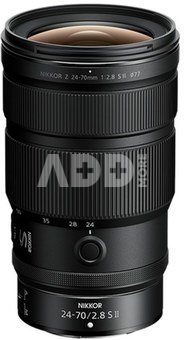
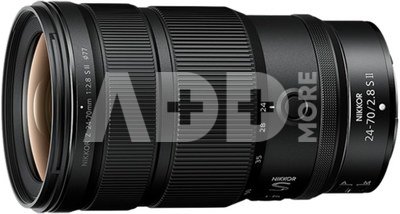
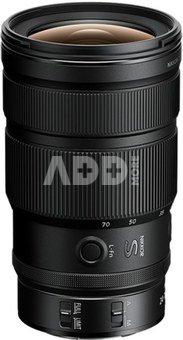
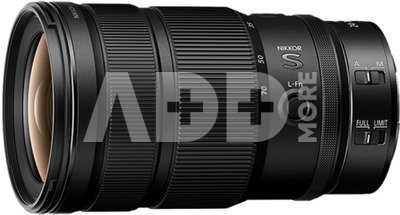
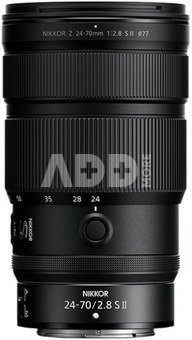
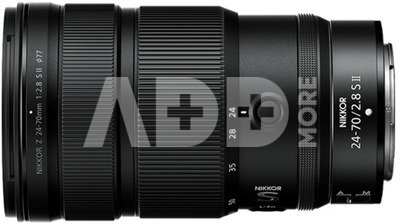
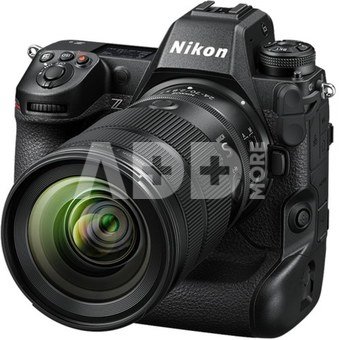
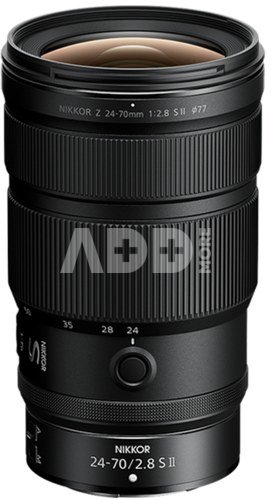
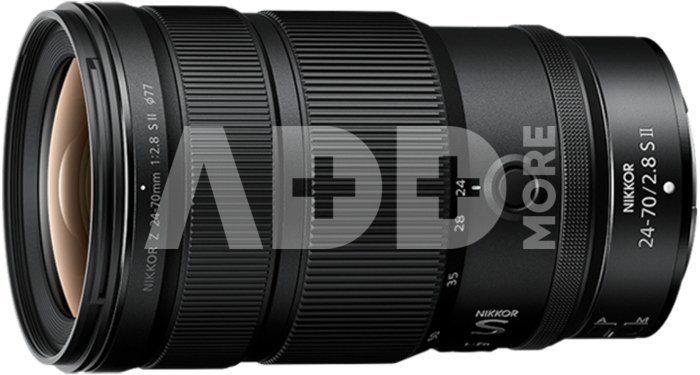
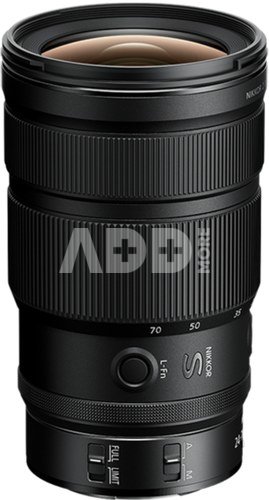
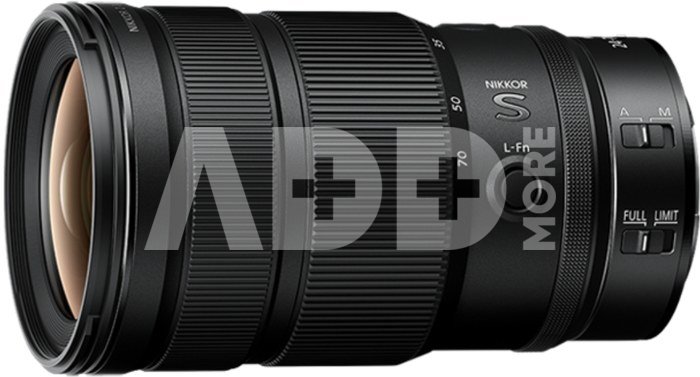
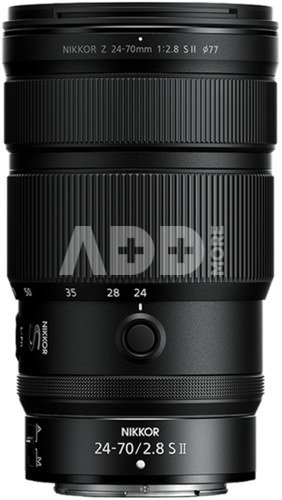
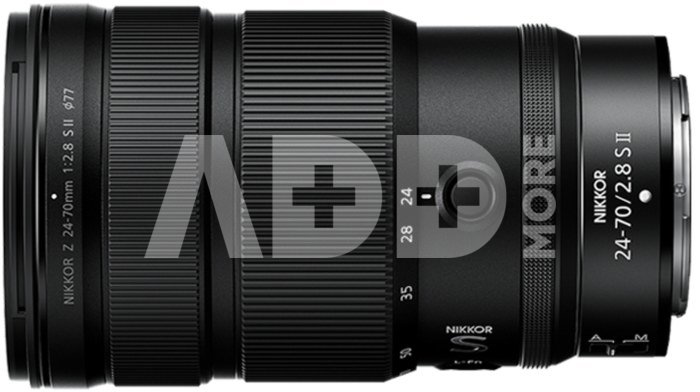
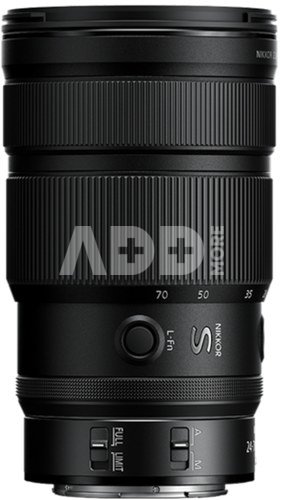
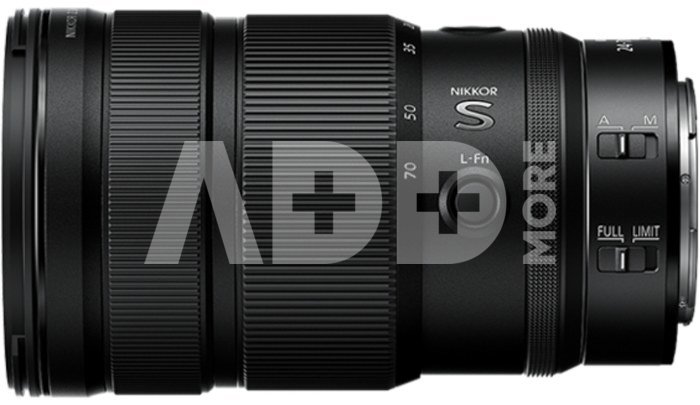
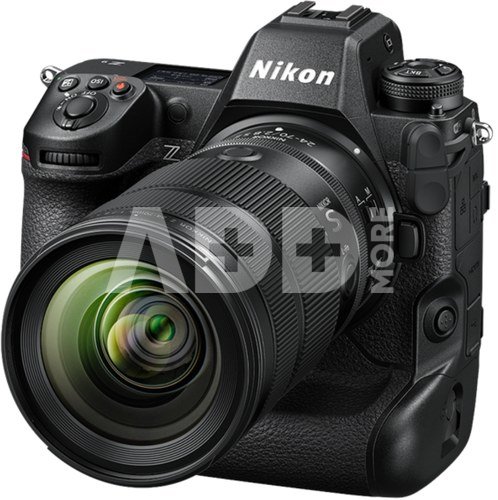
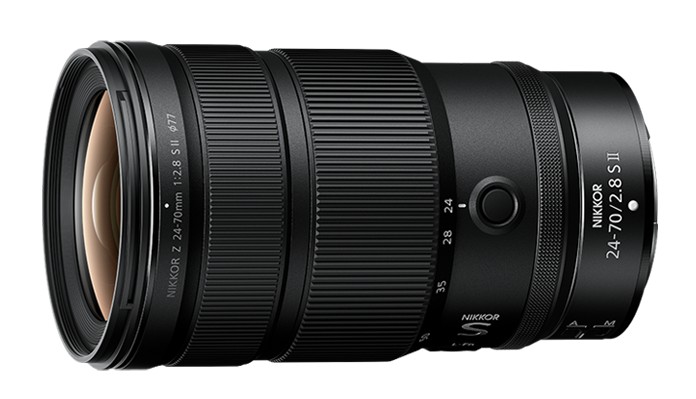
Nikon NIKKOR Z 24-70 mm f/2.8 S II - the essential pro zoom lens, redefined. More versatile and stable with the world's first internal zoom in this class* (*As of August 22, 2025, among 24–70mm f/2.8 interchangeable lenses for full-frame/FX-format mirrorless cameras. Based on Nikon research.). Faster and quieter with Nikon's best AF system to date. Smaller, lighter and more durable—all with a new optical formula that takes sharpness, bokeh and anti-glare performance to thrilling new levels.
IDEAL FOR GIMBALS AND MATTE BOXES
When your camera is rigged up, you can quickly reframe your shot without having to rebalance a gimbal, reposition a matte box or move around other accessories.
BETTER PROTECTION AGAINST DUST AND MOISTURE
With no extending or retracting parts, dust and moisture have less chance of entering the sealed lens, and the barrel is stronger and lighter. (Thorough dust and drip resistance is not guaranteed in all situations or under all conditions.).
5X FASTER FOCUSING*
Silky Swift Voice Coil Motors (SSVCM) and a high-performance AF actuator boost the speed of the multi-focus system beyond any NIKKOR lens yet. (*As of August 22, 2025, among 24–70mm f/2.8 interchangeable lenses for full-frame/FX-format mirrorless cameras. Based on Nikon research.).
50% QUIETER AND SMOOTHER
Autofocus vibrations have been all but eliminated, ensuring camera noise never disturbs special moments or ruins important video takes.
ENHANCED TRACKING WHILE ZOOMING
Focus tracking performance during zooming is enhanced by approx. 60%*, making it easier to keep your subject in focus while quickly zooming in or out. (*As of August 22, 2025, among 24–70mm f/2.8 interchangeable lenses for full-frame/FX-format mirrorless cameras. Based on Nikon research.).
SMOOTH FOCUS TRANSITIONS DURING PUSH-INS
Focus breathing has been suppressed to staggering new levels—less than half the amount of the previous generation 24-70mm f/2.8 lens—and the fast, silent AF system tracks subjects without jitter during push-ins.
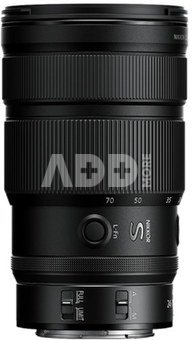
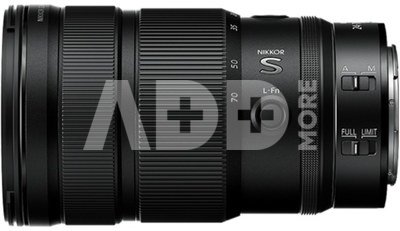
CUSTOM CONTROL RING WITH OPTIONAL CLICK
For precise, incremental adjustments—like selecting a specific ISO setting—clicking *2 tells you how many steps you've adjusted. For seamless adjustments to things like power aperture or Hi-Res Zoom, you can turn clicking off. (*2 - This feature is compatible with the Z9, Z8, Z7II, Z6III, Z6II, Z5II, Z5, Zf, and Z50II (as of August 22, 2025). Please make sure your camera’s firmware is updated to the latest version before use.).
CLOSE FOCUS DISTANCE. HIGH MAGNIFICATION.
Focus as close as 9.4 inches at 24mm, or magnify subjects up to 0.32x at 70mm. Since the lens doesn't get longer as you zoom, you won't risk accidentally bumping into close foreground elements.
THE SUPERIOR SHARPNESS OF A Z MOUNT LENS
Nikon's groundbreaking large mount delivers ample light across the frame for edge-to-edge sharpness and clear description at every focal length, even when shot wide open.
BEAUTIFUL BOKEH AND NATURAL GRADATION
The combination of a constant f/2.8 aperture and 11 rounded diaphragm blades produces soft, round bokeh with natural gradation that gives your subject an almost 3D quality.
CLARITY IN ALL CONDITIONS
Shoot toward light without worrying about flare or ghosting, thanks to Nikon's proprietary Meso Amorphous Coat and ARNEO coating.
VIRTUALLY FLAWLESS RENDERING
Extra-low Dispersion (ED) and Aspherical ED glass elements keep resolution high while suppressing undesirable fringing, distortion and false color.
THE S-LINE DIFERRENCE
The S-Line designation is reserved for premium NIKKOR Z lenses. As an S-Line product, the NIKKOR Z 24-70mm f/2.8 S II features Nikon's best optics, most advanced coatings, cutting-edge technology and premium build.
1. How to choose the right lens for a mirrorless camera?
When choosing the right lens for a mirrorless camera, it is important to consider your photography needs and style. First, decide on the resolution and focusing distance you require. For portraits, lenses with a wide aperture, such as a 50mm f/1.8, are often preferred. If you enjoy landscapes, go for a wide-angle lens (e.g., 24mm). To capture distant objects, telephoto lenses (e.g., 70-200mm) are useful. Another important factor is the lens’s light-gathering ability, which affects performance in low-light conditions. A stabilization system can also be important, especially for longer lenses. It’s important to evaluate the build quality of the lens and the manufacturer's reputation. Try out several lenses and consider your future needs to choose the right and long-lasting investment in your photography.
2. Are all lenses compatible with all mirrorless cameras?
Not all lenses are universal for all mirrorless cameras. Different manufacturers may have different mounts, so it is important to check the lens compatibility with your camera. For example, lenses for Canon, Nikon, Sony, and other manufacturers' mirrorless cameras may not be interchangeable without adapters. It is also important to consider the sensor size. APS-C lenses may be disproportionately large for full-frame cameras. Before purchasing a lens, it is advisable to check the manufacturer's compatibility chart and consider the specific requirements of your camera. Adapters can allow the use of third-party lenses, but there may be some loss in functionality or quality.
The website uses cookies, which help you ensure quality of service. Continuing browsing, you agree with fotoaparatas.lt cookies policy.Agree



.jpg)
















Reviews
0 average rating (0 votes)