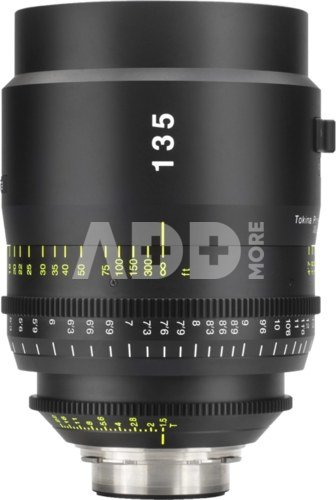
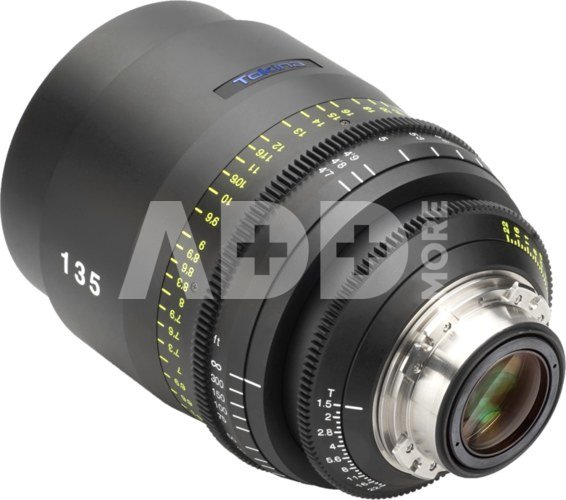
TOKINA VISTA 135MM T1.5 CINEMA MFT
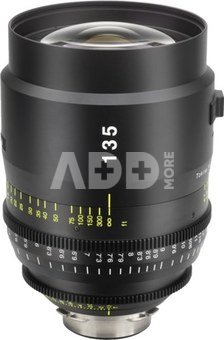
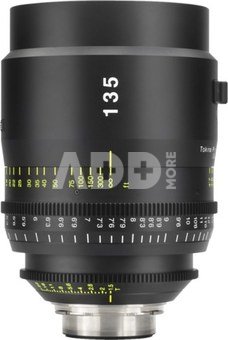
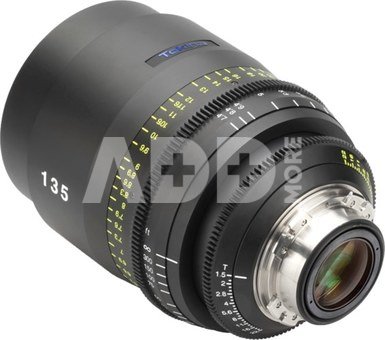
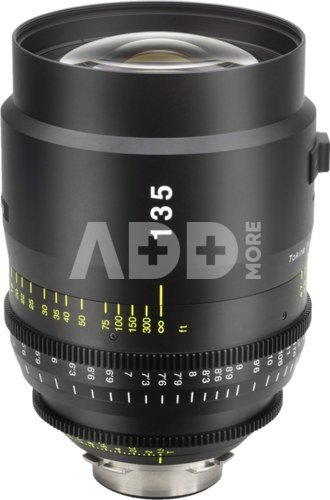
The Tokina Vista 135mm T1,5 Cinema Lens shares the same form factor, lens gear position, focus rotation, and front barrel diameter as the other Tokina Cinema Vista prime lenses to fascilitate fast and easy lens changes and use of accessories.It features a fast T stop of 1,5, ideal when shooting in low light conditions or to create a scene with really shallow depth of fiel. The lens covers an image circle of 46,7 mm, even more than the full-frame format, and the use of aspherical elements and modern coatings provides exceptionally low chromatic abberations and sharp images even when recording video at 8K resolution.Like other Tokina Vista lenses, it has nearly no breathing during focus pulls and features clearly marked focus and iris scales on both sides. A 9-bladed iris provides round, out of focus highlights for a beautiful looking bokeh.
Features Fast 1,5 T stop, good for low light filming Image circle of 46,7 mm covers full-frame sensor size , VistaVision and Red Dragon Very pleasing image character across the iris range and usable wide open Consistent length of lens during focus pull No image shift during focus pull 9 bladed Iris for natural looking bokeh Robust construction Focus and iris scales on both sides
Discuss with a consultant in Kaunas
We don't have
Klaipėda Address: Birželio 23-iosios g. 23g Working hours: I-V 09:00 - 18:00 VI-VII not working Phone: +370 674 59488
Discuss with a consultant in Klaipėda
We don't have
Klaipėda Address: Taikos pr. 17 Working hours: I-V 10:00 - 19:00 VI 10:00 - 14:00 VII not working Phone: +370 604 43972
1. How to choose the right lens for a mirrorless camera?
When choosing the right lens for a mirrorless camera, it is important to consider your photography needs and style. First, decide on the resolution and focusing distance you require. For portraits, lenses with a wide aperture, such as a 50mm f/1.8, are often preferred. If you enjoy landscapes, go for a wide-angle lens (e.g., 24mm). To capture distant objects, telephoto lenses (e.g., 70-200mm) are useful. Another important factor is the lens’s light-gathering ability, which affects performance in low-light conditions. A stabilization system can also be important, especially for longer lenses. It’s important to evaluate the build quality of the lens and the manufacturer's reputation. Try out several lenses and consider your future needs to choose the right and long-lasting investment in your photography.
2. Are all lenses compatible with all mirrorless cameras?
Not all lenses are universal for all mirrorless cameras. Different manufacturers may have different mounts, so it is important to check the lens compatibility with your camera. For example, lenses for Canon, Nikon, Sony, and other manufacturers' mirrorless cameras may not be interchangeable without adapters. It is also important to consider the sensor size. APS-C lenses may be disproportionately large for full-frame cameras. Before purchasing a lens, it is advisable to check the manufacturer's compatibility chart and consider the specific requirements of your camera. Adapters can allow the use of third-party lenses, but there may be some loss in functionality or quality.

















Reviews
0 average rating (0 votes)