TAMRON 150-500MM F5-6.7 DI III VC VXD SONY E + 5 METAI EU GARANTIJA
A hand-holdable full-frame 500mm lens that defies conventional wisdom
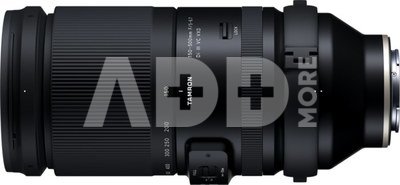
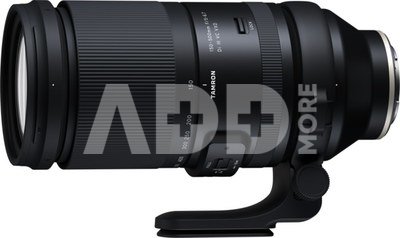
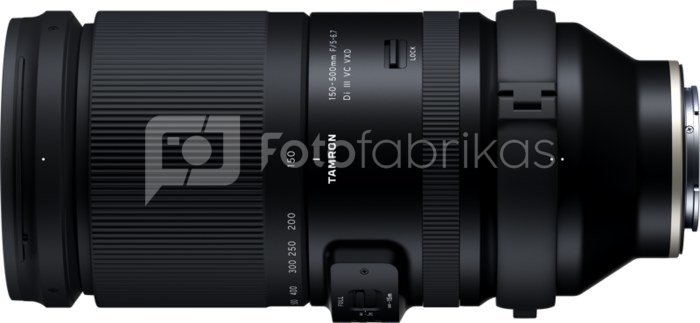
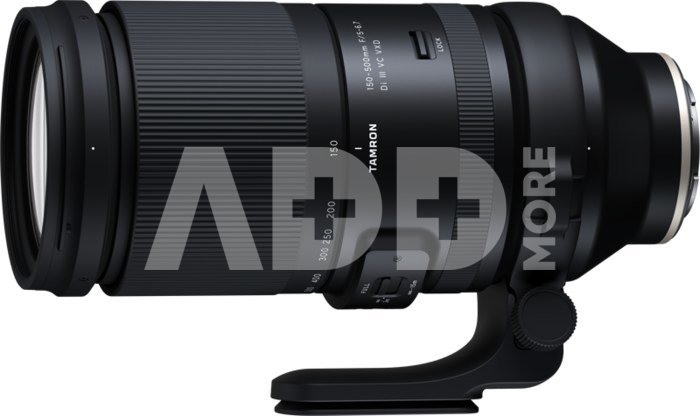
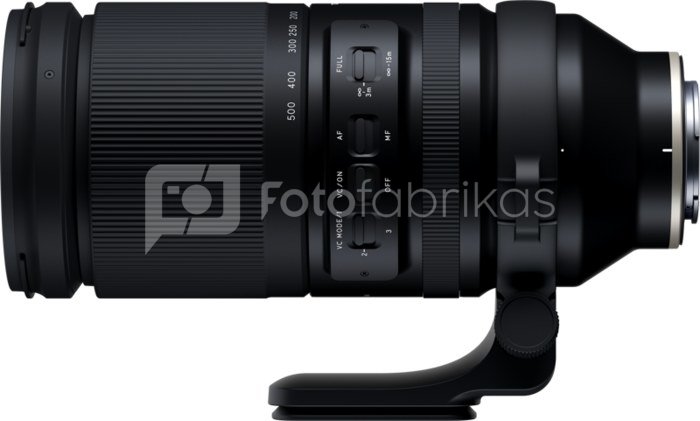
The 150-500mm F5-6.7 is just 209.6mm long with a maximum diameter of 93mm, an astoundingly compact size for a 500mm-class ultra-telephoto zoom for full-frame mirrorless cameras. Even when extended to the 500mm telephoto end, the lens is still remarkably compact at only 283mm. The lens zooms from 150mm to 500mm by rotating the zoom ring through an arc of just 75° — less than one-quarter of a turn. This feature enables rapid adjustment to the desired angle of view with minimal movement, avoiding missed opportunities and facilitating intuitive composition. TAMRON’s renowned VC mechanism also significantly improves handheld performance by counteracting camera shake.
Amazing high image quality despite its compact size
The optical construction features 25 elements in 16 groups. The generous and effective use of special lens elements including one XLD (eXtra Low Dispersion), five LD (Low Dispersion), and two Hybrid Aspherical lens elements thoroughly controls aberrations including axial chromatic aberrations. This 150-500mm f/5-6.7 ultra-telephoto zoom lens is designed and constructed with strong emphasis on compact size and usability without compromising image quality, so users can enjoy exceptionally high resolving power across the entire image.
VXD AF motor provides high speed, high precision, and excellent quietness
The 150-500mm f/5-6.7 features the same highly acclaimed VXD linear motor focus mechanism that was first introduced in the 70-180mm f/2.8 Di III VXD (Model A056). VXD delivers extreme high-speed and high-precision movement and ensures exceedingly responsive performance. Even when shooting at the ultra-telephoto end with a focal length of 500mm, the 150-500mm f/5-6.7 provides fast, comfortable and accurate focusing at all shooting distances, from near to far.
Focus tracking has been vastly improved to facilitate capturing fast-moving subjects, for example sporting events, birds and aviation photography. This ensures that those dramatic, action-packed moments are never missed, whether shooting still photos or video. Additionally, the linear motor also reduces drive noise and vibrations produced during focusing (as compared to a conventional drive system), making it ideal for shooting both still photos and video in low-noise environments.
TAMRON’s acclaimed Vibration Compensation delivers excellent image stabilization
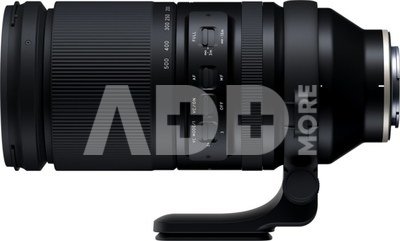
The slim, compact 150-500mm f/5-6.7 is equipped with TAMRON’s VC mechanism. The lens features a VC mode selection switch with three settings (Mode 1: Standard, Mode 2: Exclusively for Panning, and Mode 3: Framing Priority) so the ideal VC mode can be invoked to match shooting conditions. This functionality delivers excellent image stabilization performance, enabling efficient reduction of image blurring caused by camera shake.
Exciting telephoto macro focuses as close as 0.6m
The 150-500mm f/5-6.7 offers excellent close-up shooting capabilities for an ultra-telephoto lens. The MOD is 0.6m at the 150mm end and 1.8m at the 500mm telephoto end. The maximum magnification ratio at 150mm is exceptionally high at 1:3.1. Users can shoot powerful telephoto-macro images of subjects including flowers and insects while maintaining a reasonable shooting distance — closer than you can get with conventional ultra-telephoto zoom lenses.
Typ of Sensor
Full Frame
Focal length Movie
150 mm
Color
juoda
Discuss with a consultant in Kaunas
We don't have
Klaipėda Address: Birželio 23-iosios g. 23g Working hours: I-V 09:00 - 18:00 VI-VII not working Phone: +370 674 59488
Discuss with a consultant in Klaipėda
We don't have
Klaipėda Address: Taikos pr. 17 Working hours: I-V 10:00 - 19:00 VI 10:00 - 14:00 VII not working Phone: +370 604 43972
1. How to choose the right lens for a mirrorless camera?
When choosing the right lens for a mirrorless camera, it is important to consider your photography needs and style. First, decide on the resolution and focusing distance you require. For portraits, lenses with a wide aperture, such as a 50mm f/1.8, are often preferred. If you enjoy landscapes, go for a wide-angle lens (e.g., 24mm). To capture distant objects, telephoto lenses (e.g., 70-200mm) are useful. Another important factor is the lens’s light-gathering ability, which affects performance in low-light conditions. A stabilization system can also be important, especially for longer lenses. It’s important to evaluate the build quality of the lens and the manufacturer's reputation. Try out several lenses and consider your future needs to choose the right and long-lasting investment in your photography.
2. Are all lenses compatible with all mirrorless cameras?
Not all lenses are universal for all mirrorless cameras. Different manufacturers may have different mounts, so it is important to check the lens compatibility with your camera. For example, lenses for Canon, Nikon, Sony, and other manufacturers' mirrorless cameras may not be interchangeable without adapters. It is also important to consider the sensor size. APS-C lenses may be disproportionately large for full-frame cameras. Before purchasing a lens, it is advisable to check the manufacturer's compatibility chart and consider the specific requirements of your camera. Adapters can allow the use of third-party lenses, but there may be some loss in functionality or quality.




















Reviews
0 average rating (0 votes)