Laowa 65mm f/2.8 2x Ultra Macro APO Canon RF
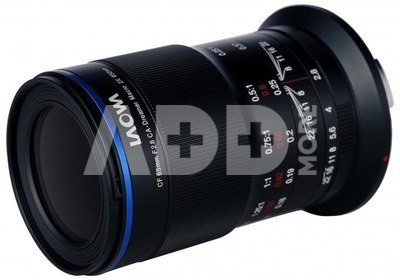
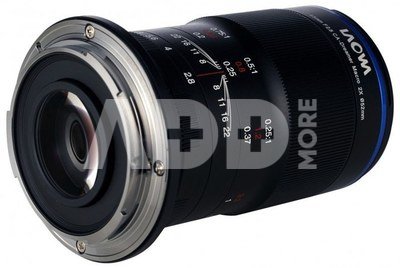
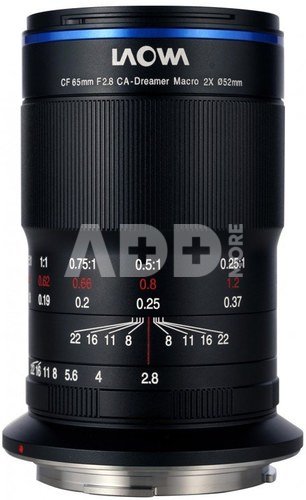
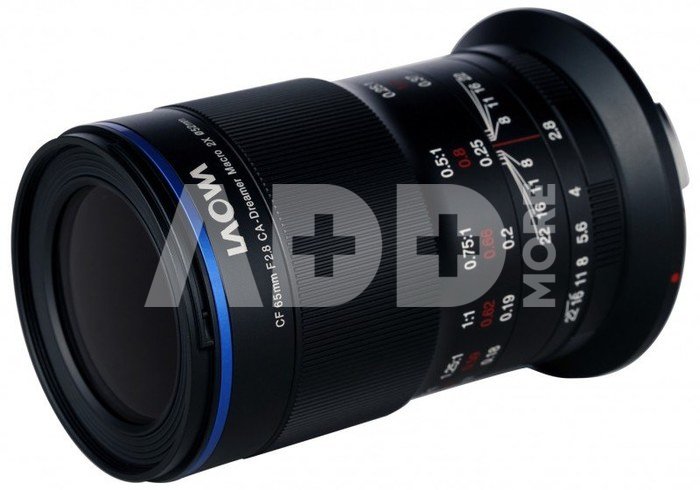
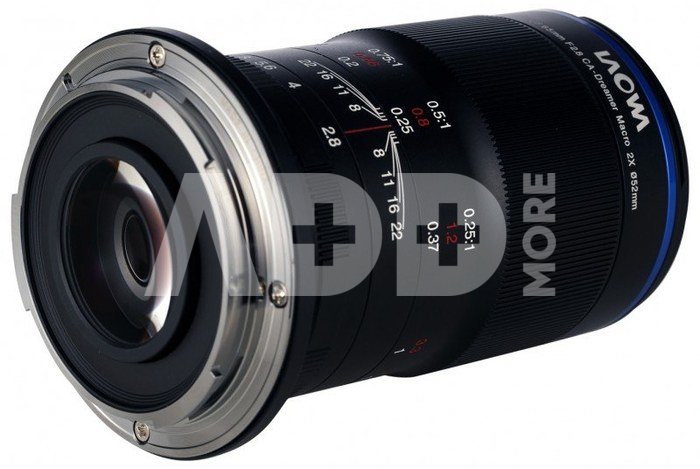
Venus Optics Laowa 65mm f/2.8 2x Ultra Macro APO lens for Canon RF is a continuation of a great line of professional lenses for photographing the smallest parts of the world around us. The lens offers a maximum magnification ratio of 2:1 along with a minimum focusing distance of 17 cm. Unlike traditional macro lenses, this model at 65mm focal length allows focusing from infinity to 2x magnification, making it ideal for all kinds of macro photography scenes. Such a wide magnification range is essential for photographing insects and plants of various sizes. Optimized for APS-C systems, the lens produces images with stunning detail and contrast throughout the frame, even when using a large relative aperture. This professional prime lens delivers exceptional resolution and sharpness.
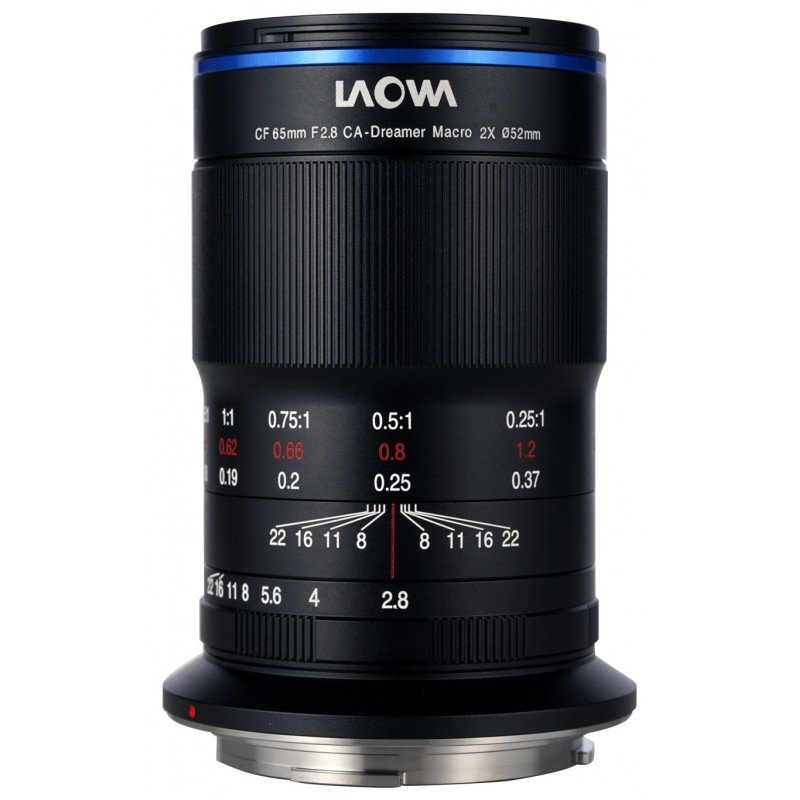
NEGLIGIBLE WEIGTH AND SIZE
At 335 grams, this extremely lightweight, compact and versatile lens is a unique addition to APS-C cameras. The small body allows the user to comfortably hold the camera and adjust focus. In addition, the internal focusing design allows the lens to maintain an unchanging length during use. It is an excellent tool for both recreational and professional photography. Due to its light weight and compactness, traveling macro filming enthusiasts will also be very happy with it.
APOCHROMATIC OPTICAL DESIGN
The optical design of the Laowa 65mm f/2.8 2X lens features very low dispersion. Responsible for this are three special lenses that minimize chromatic aberrations throughout the frame. The lens inherits the excellent APO design from its big brother, the Laowa 100 mm f/2.8 Macro 2:1. Thanks to this, it is able to eliminate lateral and longitudinal chromatic aberrations, which means that these defects both in and out of the focus area are almost invisible to the naked eye. This translates into the absence of the occurrence, characteristic purple borders around the bright parts of the photo.
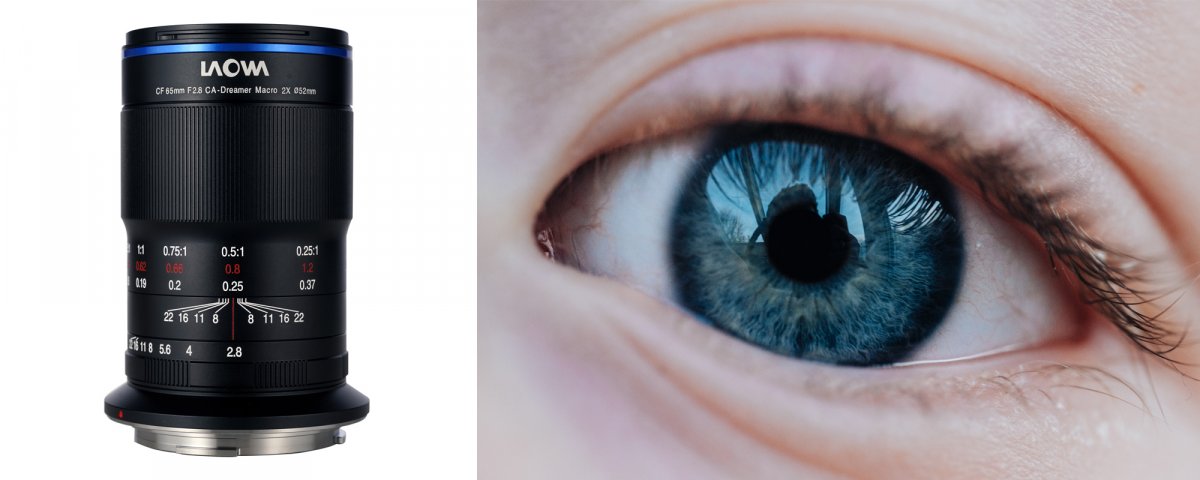
SPECIFICATIONS
Focal length: 65 mm
Minimum aperture: f/2.8
Maximum aperture: f/22
Angle of view: 24.4°
Image coverage: APS-C
Optical design: 14 elements in 10 groups(3 extra-low dispersion elements)
Number of aperture blades: 9
Min. focusing distance from the matrix: 17 cm (2X)
Max magnification: 2:1
Filter diameter: 52 mm
Dimensions: Ф5.7 x 10 cm
Weight: 335 g
Mount: Canon RF
Typ of Sensor
APS-C
Focal length Movie
65 mm
Diagonal Angle of View
24.4 °
Discuss with a consultant in Kaunas
We don't have
Klaipėda Address: Birželio 23-iosios g. 23g Working hours: I-V 09:00 - 18:00 VI-VII not working Phone: +370 674 59488
Discuss with a consultant in Klaipėda
We don't have
Klaipėda Address: Taikos pr. 17 Working hours: I-V 10:00 - 19:00 VI 10:00 - 14:00 VII not working Phone: +370 604 43972
1. How to choose the right lens for a mirrorless camera?
When choosing the right lens for a mirrorless camera, it is important to consider your photography needs and style. First, decide on the resolution and focusing distance you require. For portraits, lenses with a wide aperture, such as a 50mm f/1.8, are often preferred. If you enjoy landscapes, go for a wide-angle lens (e.g., 24mm). To capture distant objects, telephoto lenses (e.g., 70-200mm) are useful. Another important factor is the lens’s light-gathering ability, which affects performance in low-light conditions. A stabilization system can also be important, especially for longer lenses. It’s important to evaluate the build quality of the lens and the manufacturer's reputation. Try out several lenses and consider your future needs to choose the right and long-lasting investment in your photography.
2. Are all lenses compatible with all mirrorless cameras?
Not all lenses are universal for all mirrorless cameras. Different manufacturers may have different mounts, so it is important to check the lens compatibility with your camera. For example, lenses for Canon, Nikon, Sony, and other manufacturers' mirrorless cameras may not be interchangeable without adapters. It is also important to consider the sensor size. APS-C lenses may be disproportionately large for full-frame cameras. Before purchasing a lens, it is advisable to check the manufacturer's compatibility chart and consider the specific requirements of your camera. Adapters can allow the use of third-party lenses, but there may be some loss in functionality or quality.















Reviews
0 average rating (0 votes)