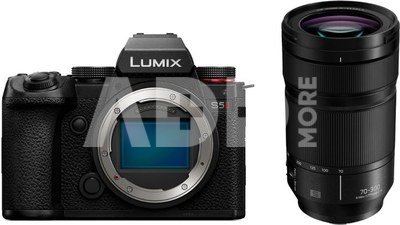
DescriptionPanasonic Lumix DC-S5II body + S 70-300mm F4.5-5.6 MACRO O.I.S. Wildlife bundle description
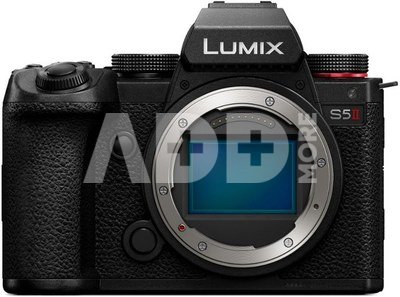
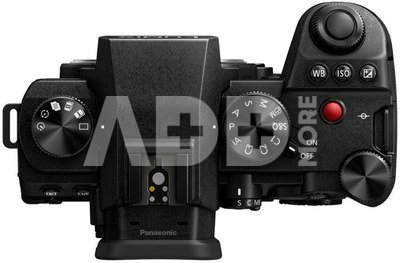
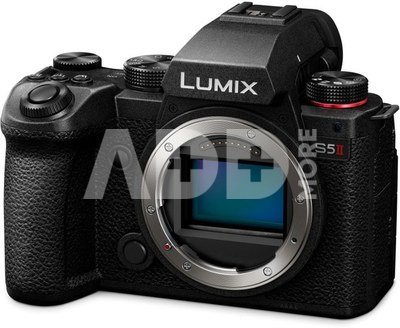
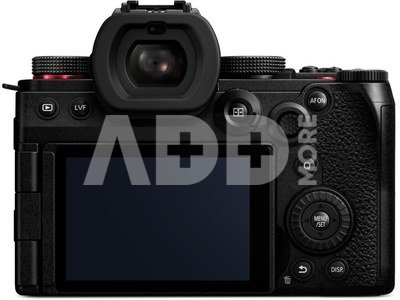
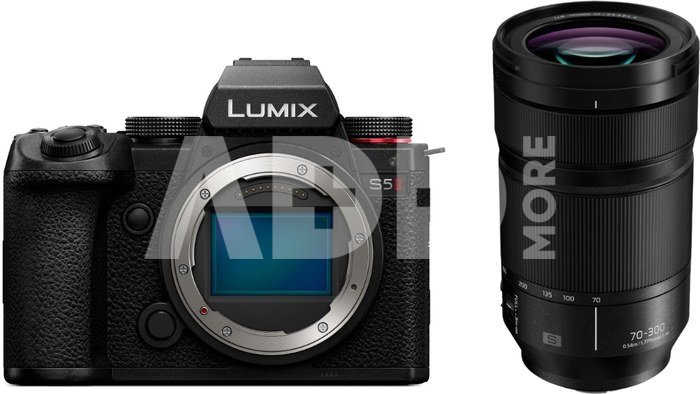
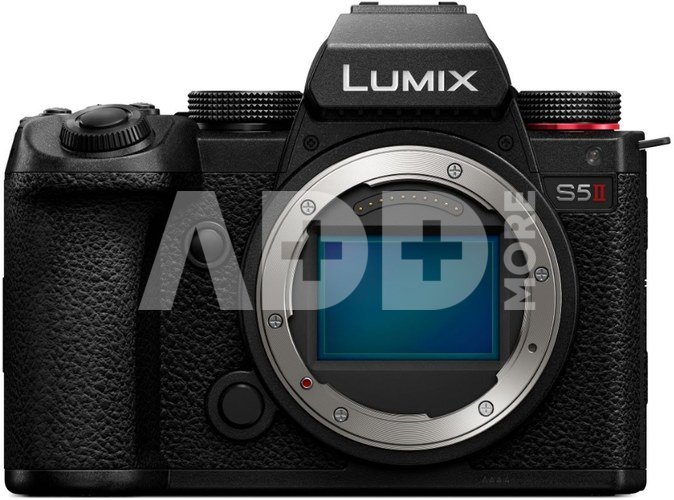
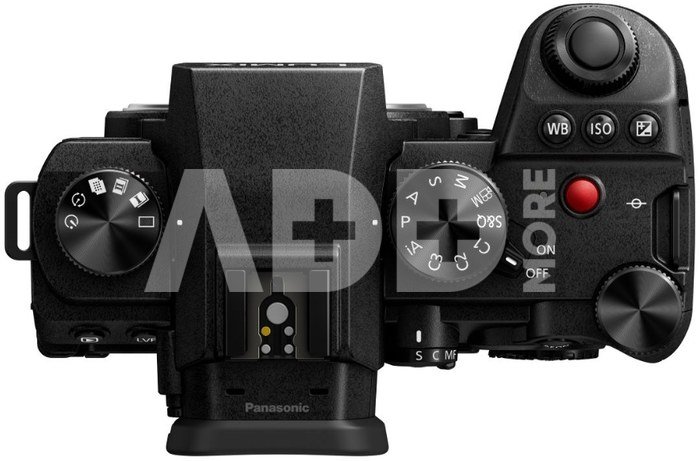
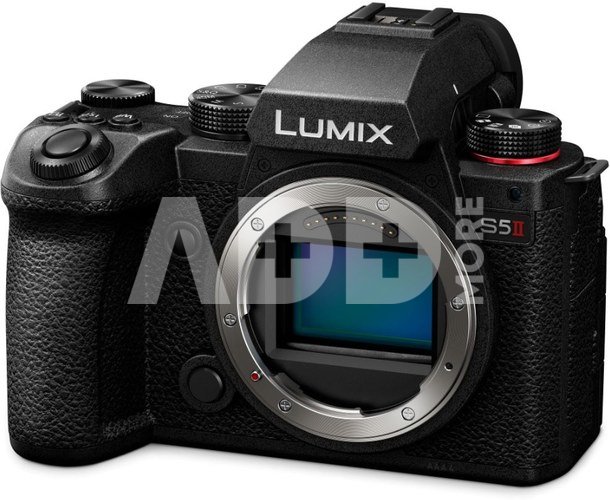
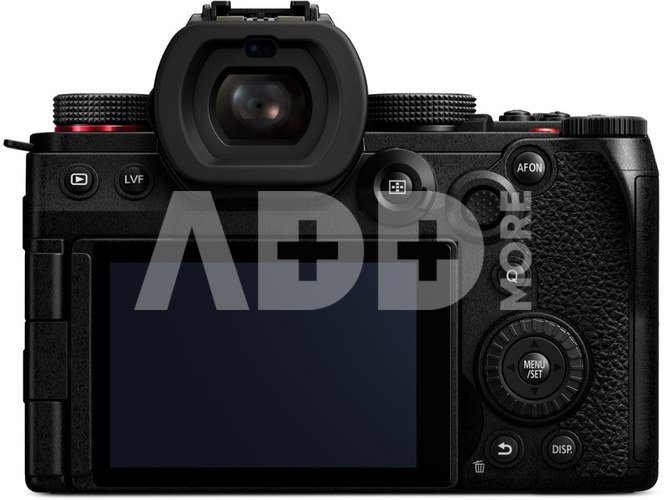
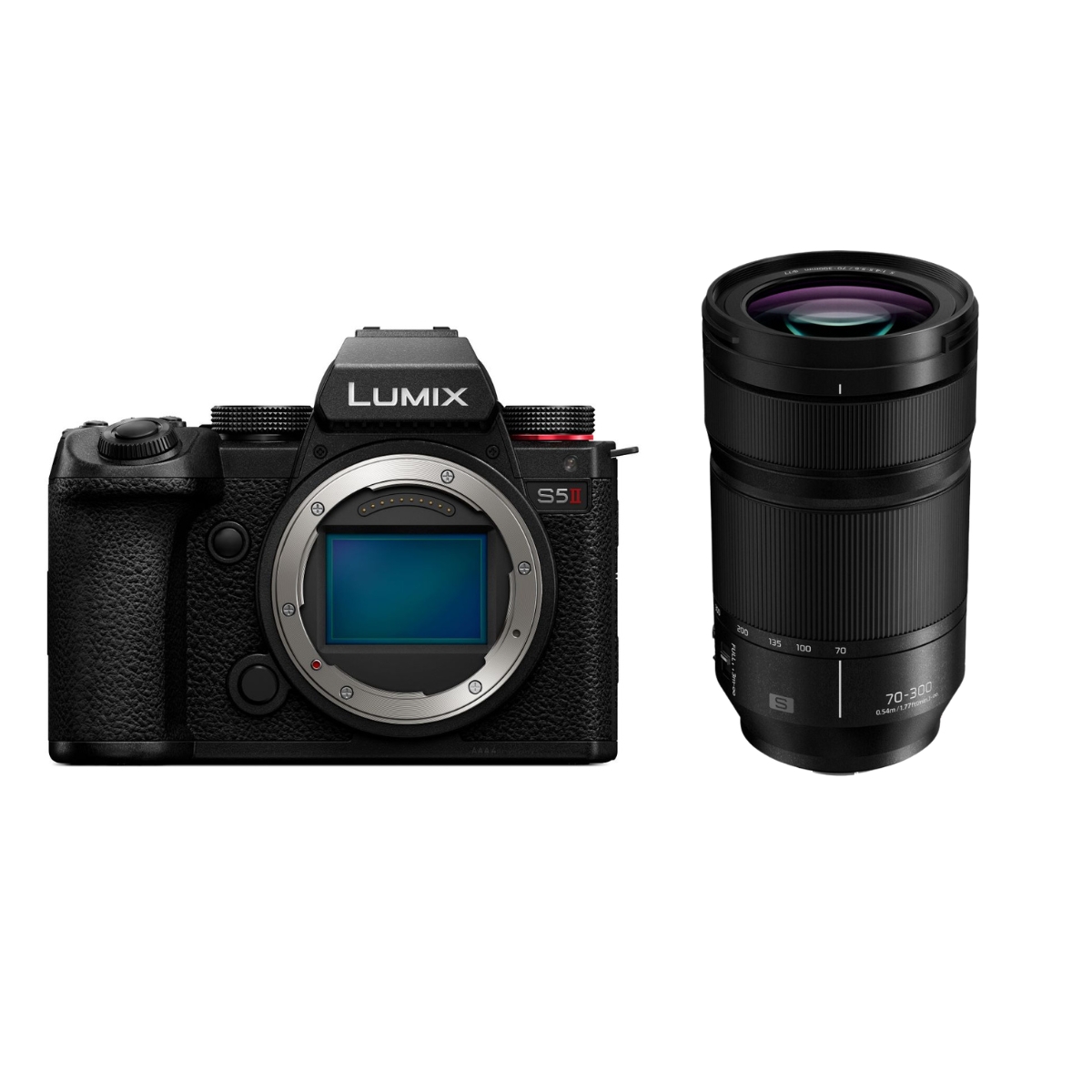
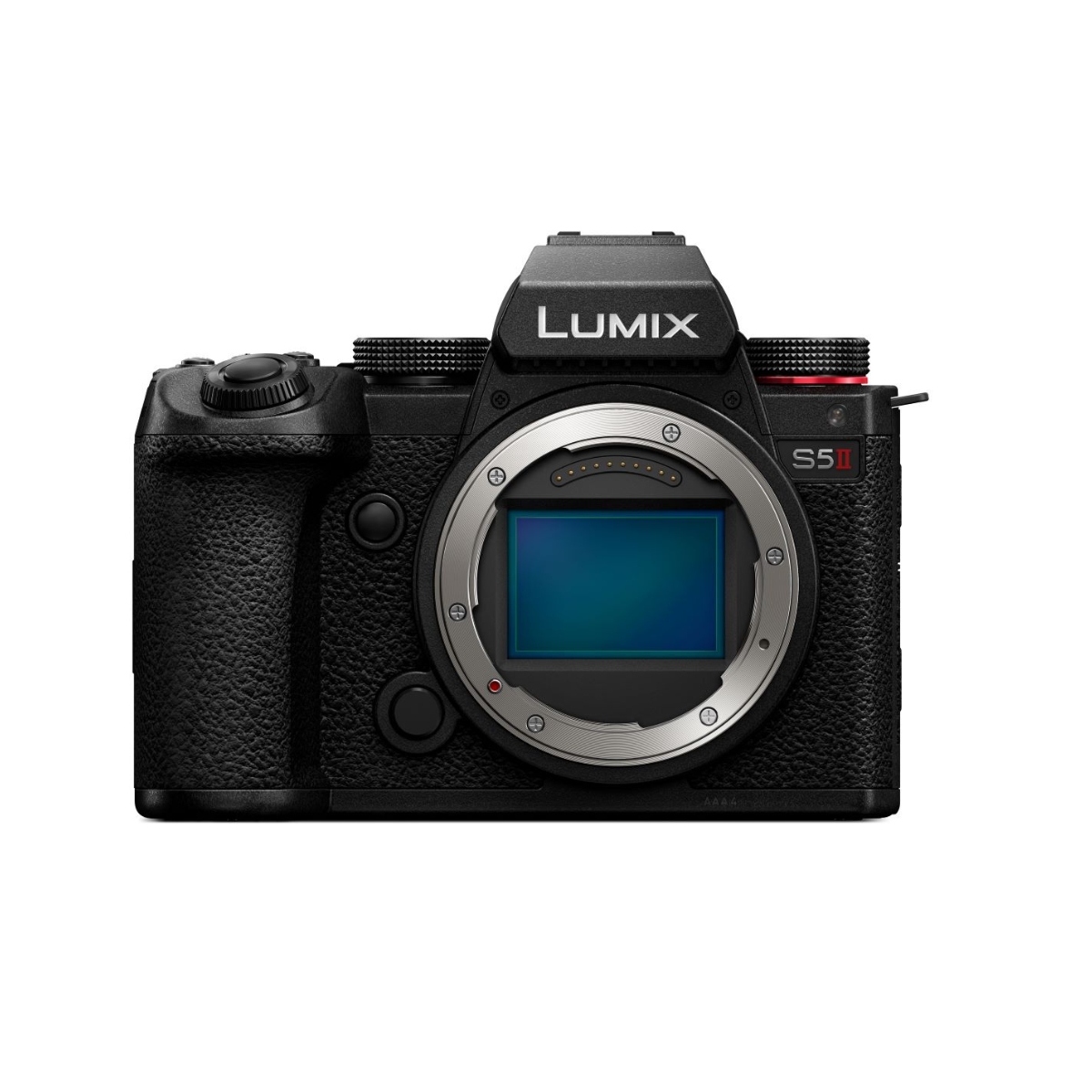
Wildlife bundle: camera Panasonic Lumix DC-S5II body + lens Panasonic Lumix S 70-300mm F4.5-5.6 MACRO O.I.S. (DC-S5M2E + S-R70300E). Panasonic introduces the LUMIX S5II mirrorless camera featuring Hybrid Phase Detection AF, enhanced Active I.S. and a newly developed 24 megapixel full-frame CMOS sensor. An innovative addition to the LUMIX S series, the sleek matte black LUMIX S5II delivers incredible performance in both movie and still photography. This camera is also remarkably mobile and easy to carry. It has been designed to meet the needs of the most ambitious creatives. This model is designed with a 24 megapixel 35mm full-frame CMOS sensor and Venus image processor. The sensor supports hybrid phase, has auto-detection focusing and the new processor delivers excellent image quality and high video speeds with the LUMIX S1H. This camera is compatible with the full range of the existing 14 LUMIX S lenses and additional full-frame L-Mount lenses made by Panasonic's L-Mount partners.
NEW LUMIX AF PERFORMANCE STANDARDS
With a new image processor developed in partnership between LEICA and LUMIX and a new 24 megapixel sensor, the LUMIX S5II and S5IIX are the first LUMIX cameras to offer automatic hybrid phase detection. The camera uses a new Phase Hybrid AF system combining PDAF with Contrast Detect AF. The new system can detect subjects more accurately in challenging conditions such as low light or backlight. Continuous AF at zoom 1 and AF micro-adjustment are also available.
MANY VIDEO FUNCTIONS AND RECORDING OPTIONS
The new processor gives the LUMIX S5IIX and S5II an extremely wide range of video recording options. Internal recording at 4:2:0 10-bit 6K (3:2) and 5.9K (16:9) at 30fps and 4:2:2 C4K and 4K at up to 60fps is possible, while the new low-profile thermal management system allows unlimited recording time. These cameras also support HFR (High Frame Rate) recording at up to 120 fps. Various image profiles are available, including 14+ stops of V-Log/V-Gamut, as well as a REAL TIME LUT function.
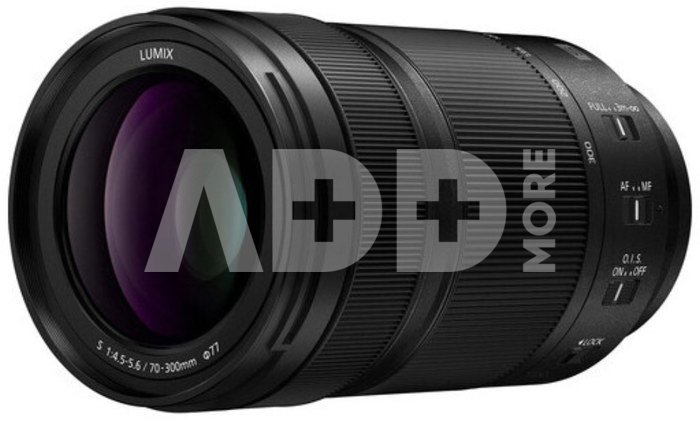
LENS PANASONIC LUMIX S 70-300mm F4.5-5.6 MACRO O.I.S.
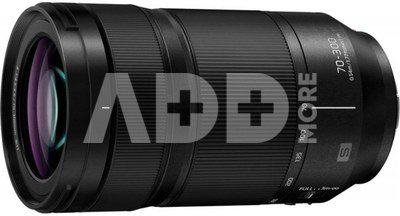
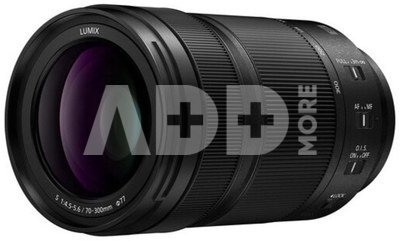
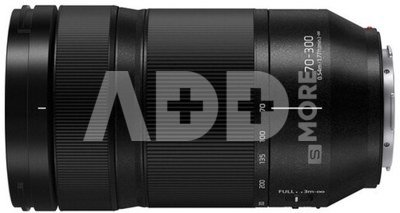
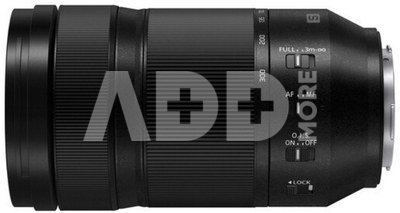
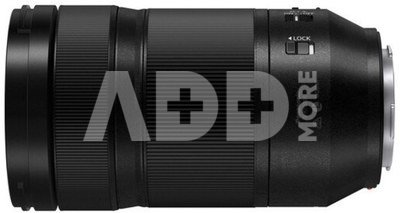
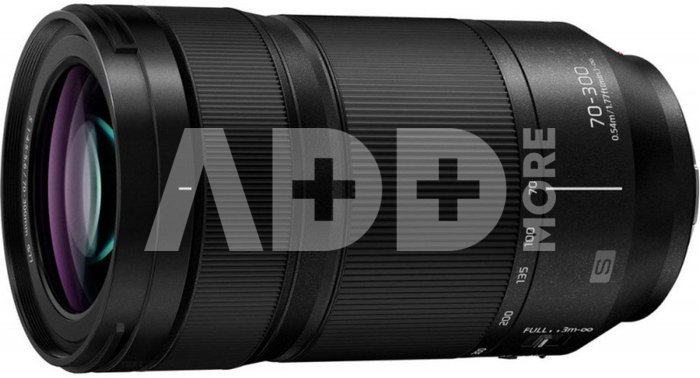
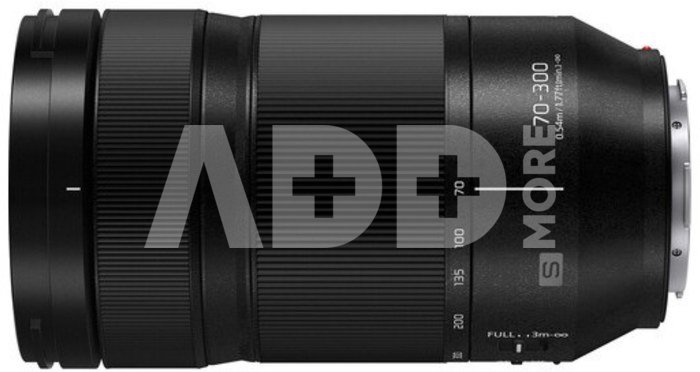
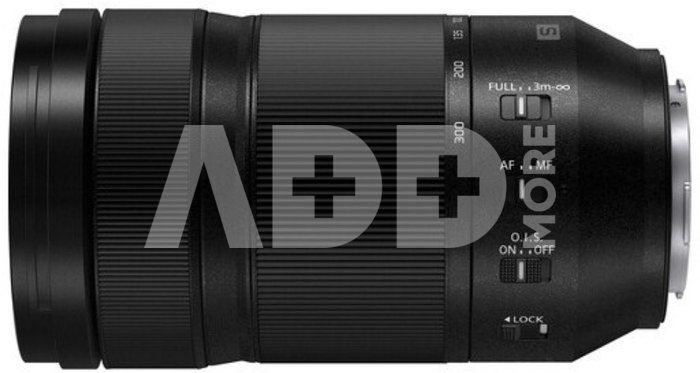
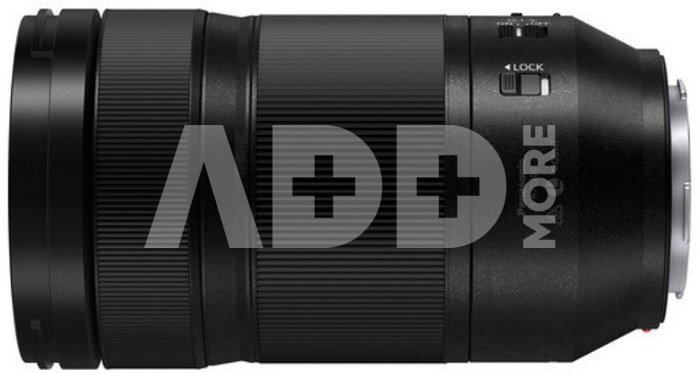
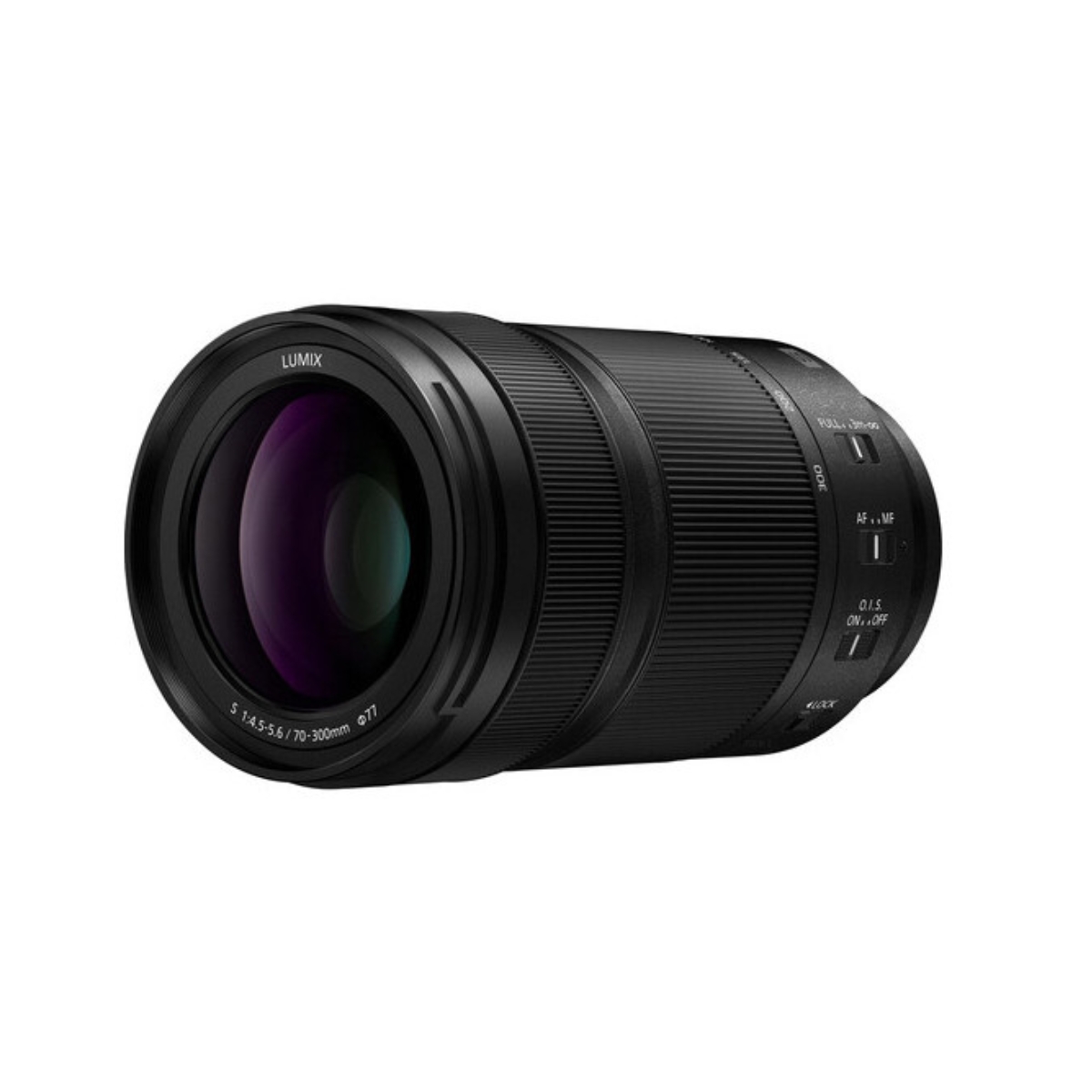
The Panasonic Lumix S 70-300mm F4.5-5.6 MACRO O.I.S. is a compact telephoto variable focal length lens with the ability to shoot macro shots. This lens can be used as a 300mm interchangeable focal length lens for dynamic close-up shots of wildlife, sporting events or plane landings. The powerful zoom gives the photographer more creative options when shooting outdoors. The optimised unit consists of 17 elements that are combined into 11 groups, including 2 ED, 1 UED and 1 UHR lenses to reduce aberrations and ensure flawless resolution. The 11-plate diaphragm with a circular aperture is distinguished by its optimal plate shape and arrangement. This helps to render light sources such as sunlight filtering through tree branches and coloured lighting in photographs, creating soft and attractive light images. The LUMIX S 70-300mm F4.5-5.6 MACRO O.I.S. lens can be used in the toughest conditions, thanks to its dust-proof, water-drop-resistant design and -10°C operation. * Dust and water droplet resistance does not guarantee that damage will be avoided if the lens comes into direct contact with dust and water. With a minimum focusing distance of 0.74 m (300 ft)* and a maximum magnification of 0.5x (300 ft), the 70-300 mm offers the freedom to exploit a wide range of shooting scenarios. Capture large-format photos of small and elusive subjects such as birds and butterflies easily from a great distance. * Minimum focusing distance of 0.54m (70mm) / 0.74m (300mm).
SPECIFICATIONS
Lens mount: L-Mount
Image Sensor Type: 35mm full-frame (35.6mm x 23.8mm) CMOS sensor
Camera effective pixels / Total pixels: 24.20 megapixels / 25.28 megapixels
Still Image Recording file format: JPEG (DCF, Exif 2.31), RAW
Battery: Li-ion Battery Pack (7.2V, 2200mAh, 16Wh) (bundled); USB power supply, USB power charging, USB power delivery
Dimensions: Approx. 134.3 x 102.3 x 90.1 mm (Body only, excluding protrusions); lens diameter: 84 mm, lens length: 148 mm
Weight: Approx. 740g (Body, Hot Shoe Cover, Battery, SD Memory Card x 1) (excluding body cap); Approx. 657g (Body, Hot Shoe Cover) (excluding body cap); lens weight: 790 g
Lens type: Telephoto zoom
Focal length (lens): 70-300mm
Maximum aperture (lens): f/4.5-5.6
Minimum aperture: (lens): f/22
Optical construction (lens): 17 elements in 11 groups
Focusing (lens): Autofocus, Manual focus
AF motor (lens): Linear motor
Image stabiliser (lens): Yes
Image stabilizer design (lens): O.I.S.
Stabilizer performance (lens): 5.5 stops
Minimum focus distance (lens): 54 cm
Number of diaphragm blades (lens): 11
Maximum reproduction ratio (lens): 0.50×
Filter thread (lens): 77 mm
Weather sealing (lens): Weather- and dustproof
Lens mount (bayonet)
L-mount
Image Sensor Size
Full frame (36 x 24 mm)
Maximum Resolution5888x3312
Discuss with a consultant in Kaunas
We don't haveKlaipėdaAddress: Birželio 23-iosios g. 23gWorking hours: I-V 09:00 - 18:00VI-VII not workingPhone: +370 674 59488
Discuss with a consultant in Klaipėda
We don't haveKlaipėdaAddress: Taikos pr. 17Working hours: I-V 10:00 - 19:00VI 10:00 - 14:00VII not workingPhone: +370 604 43972
Specification
Producer(?)
Link to the official manufacturer website
Panasonic
Lens mount (bayonet)
L-mount
Vaizdo sensorius
Image Sensor Size
Full frame (36 x 24 mm)
Maximum Resolution
5888x3312
Effective pixels
24.2 mln. pixels
Sensor type
CMOS
Nuotrauka
ISO rating
[Normal] Auto / 50* / 100-51200 / 102400* / 204800* (1/3 or 1 EV step) *Extended ISO
1. Which mirrorless camera should I choose for better photo results?
Choosing the right mirrorless camera for better photo results depends on your individual needs and budget. The Sony Alpha a7 III is a popular choice, offering excellent dynamic range and efficient autofocus. The Canon EOS R6 also boasts high technical performance, including powerful image stabilisation. The Nikon Z6 II is another attractive choice with excellent dynamic range and high ISO sensitivity. It's important to consider the features of each model, the choice of lenses and the ability to suit your shooting style. It is recommended to read reviews and test equipment before buying, if possible.
2. What are the advantages of mirrorless cameras compared to DSLR cameras?
The advantages of mirrorless cameras over DSLR cameras include modern technology and lightness. Mirrorless cameras are more compact and lighter, making them more comfortable to carry. They often have a smaller body because they do not have a mirror system, which reduces the overall weight. The use of an electronic viewfinder allows the actual frame to be seen before the picture is taken, thus optimising composition and exposure. Mirrorless cameras have fast autofocus and some models may perform better in low light conditions. They also offer more creative options, including a range of filters and effects. The new generation of lenses offers improved performance and efficiency, contributing to higher quality photos. However, every photographer's needs are different, so it is important to consider your preferences carefully before choosing a camera.
The website uses cookies, which help you ensure quality of service. Continuing browsing, you agree with fotoaparatas.lt cookies policy.Agree


















Reviews
0 average rating (0 votes)