
+370 462 46444
I-V 10:00-19:00
VI 10:00-14:00

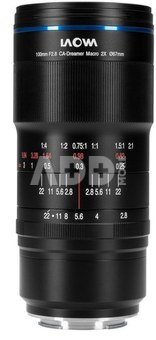
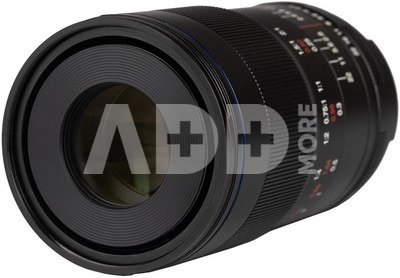
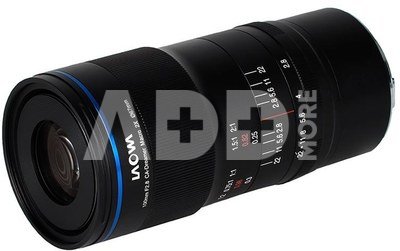
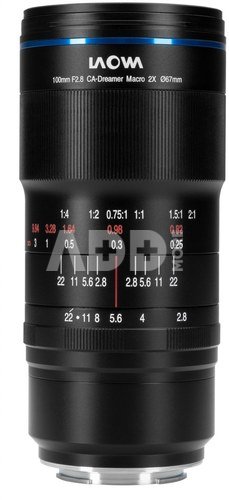
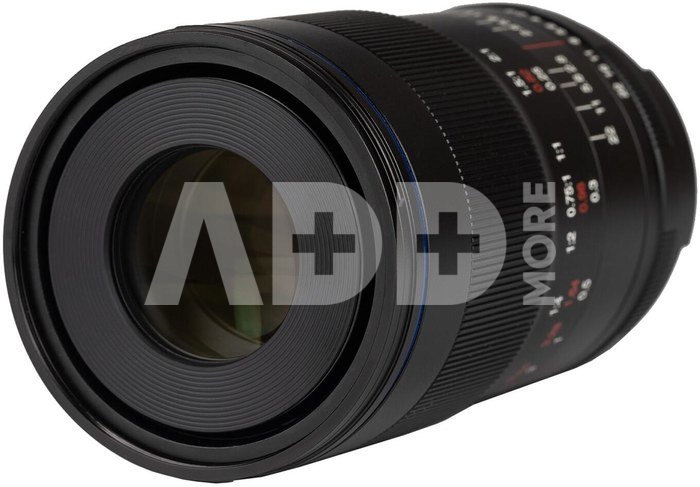
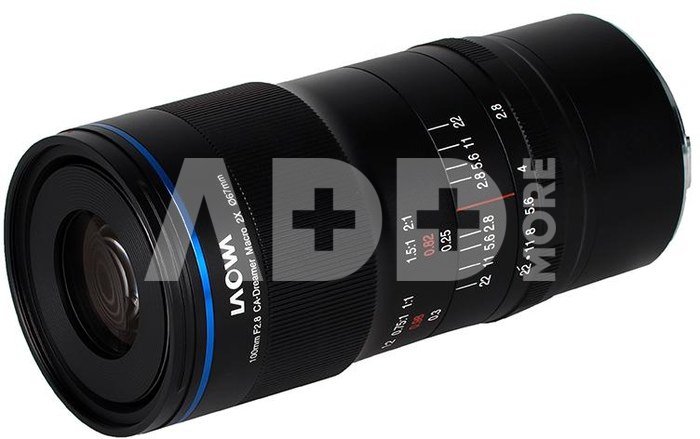
Laowa 100mm f/2.8 2x Ultra Macro APO Canon RF

Laowa 100mm f/2.8 2x Ultra Macro APO Canon RF
Code: 00791FDP
Manufacturer code: VE10028RF
Add to wishlist
EU warehouse
Delivery 8-10 w.d.
Choose properties
Color
608.22
Extended warranty
Product insurance

Pick up for free in the store in Kaunas (Birželios 23-iosios str. 23g) Birželio 29 d.

Pick up for free in Klaipėda, in the store (Taikos pr. 17) Birželio 29 d.

We will deliver to your home via courier service Liepos 01 d.

Turite klausimų? +370 462 46444 Send request

DescriptionLaowa 100mm f/2.8 2x Ultra Macro APO Canon RF description

It features an apochromatic (APO) characteristic that chromatic aberration at both ‘in-focus’ & ‘out-of-focus’ is both invisible. This new 100mm lens can cover full frame sensor size and focus from 2:1 magnification to infinity. The lens has a similar physical size to other 100mm Macro lenses in the market but its wider magnification range allows macro photographers to capture subjects at any sizes. This 100mm f/2.8 lens can also focus to infinity and serve as a portrait lens with exceptional optics quality. “Just because its 100mm does not mean its normal” – 2:1 Magnification at same physical size Laowa 100mm f/2.8 2:1 Ultra-Macro is the second 2:1 Macro lens that we have (The first one is the   60mm f/2.8 ). 100mm is one of the most common focal length for macro photography usage. All of the 100mm macro lenses in the market can only reproduce 1:1 magnification (life-size) image only. The extended 2x magnification means more details can be seen through the lens. Photographers can now take advantage of the wider magnification range to capture bugs at different sizes.   © Gua Ge   © XiaoKaiHuo © Alberto Ghizzi Panizza – Apochromat APO design (invisible CA) The Laowa 100mm f/2.8 has a Apochromat (APO) design where the chromatic aberration (CA) at BOTH in-focus & out-of-focus area (Longitudinal CA) is controlled to the minimal. CA has long been one of the most annoying aberrations for macro photography and now you can forget about this and focus more on taking a great shot.   © Emanuele Biggi © Jie Ge   © Fengniao – Similar size as 1:1 macro lens Despite the extended magnification range, the size of our Laowa 100mm is actually comparable to other macro lenses in the market.   Size Comparison vs other Macro lenses (© ShaoWeiWei) * Sony FE version is a bit longer than Canon / Nikon version due to the flange distance difference.   © John Hallmèn (Focus stacked at f/3.5) – Smooth Bokeh rendering   © Nicky Bay © Alberto Ghizzi Panizza   © Keith Cooper – Outstanding Portrait lens with crystal sharpness Laowa 100mm f/2.8 2:1 Ultra Macro APO is not only a exceptionally macro lens. It can also focus to infinity and is a very decent telephoto portrait lens.   © Zi Yi   © Zi Yi Watch the review from Christopher Frost Photography:    

Max Aperture 2.8 F

Focal length Movie 100 mm

Delivery time 8-10 w.d.

Discuss with a consultant in Kaunas

We don't have Klaipėda Address: Birželio 23-iosios g. 23g Working hours: I-V 09:00 - 18:00 VI-VII not working Phone: +370 674 59488
Kaunas

Discuss with a consultant in Klaipėda

We don't have Klaipėda Address: Taikos pr. 17 Working hours: I-V 10:00 - 19:00 VI 10:00 - 14:00 VII not working Phone: +370 604 43972
Klaipėda
Specification
Producer(?) LAOWA
Type
Max Aperture 2.8 F
Focal length Movie 100 mm
Stabilization
Размер кадра
Delivery time 8-10 w.d.
Product codes

00791FDP VE10028RF 6940486701241

Reviews

0 average rating (0 votes)

 0
 0
 0
 0
 0

Leave a comment

Only registered users can rate.

Customer reviews (0)

There are no reviews. Be first!

1. How to choose the right lens for a mirrorless camera?

When choosing the right lens for a mirrorless camera, it is important to consider your photography needs and style. First, decide on the resolution and focusing distance you require. For portraits, lenses with a wide aperture, such as a 50mm f/1.8, are often preferred. If you enjoy landscapes, go for a wide-angle lens (e.g., 24mm). To capture distant objects, telephoto lenses (e.g., 70-200mm) are useful. Another important factor is the lens’s light-gathering ability, which affects performance in low-light conditions. A stabilization system can also be important, especially for longer lenses. It’s important to evaluate the build quality of the lens and the manufacturer's reputation. Try out several lenses and consider your future needs to choose the right and long-lasting investment in your photography.

2. Are all lenses compatible with all mirrorless cameras?

Not all lenses are universal for all mirrorless cameras. Different manufacturers may have different mounts, so it is important to check the lens compatibility with your camera. For example, lenses for Canon, Nikon, Sony, and other manufacturers' mirrorless cameras may not be interchangeable without adapters. It is also important to consider the sensor size. APS-C lenses may be disproportionately large for full-frame cameras. Before purchasing a lens, it is advisable to check the manufacturer's compatibility chart and consider the specific requirements of your camera. Adapters can allow the use of third-party lenses, but there may be some loss in functionality or quality.