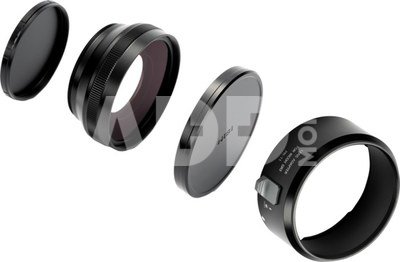
NiSi Wide Conversion Lens Kit for Ricoh GR III (Adapter + 0.78x Lens)
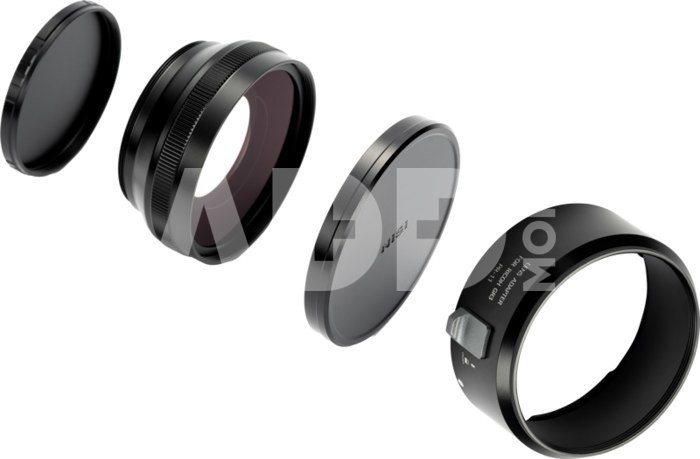
NiSi Wide Conversion Lens Kit for Ricoh GR III (Adapter + 0.78x Lens)Macro Mode Compatible – Works seamlessly with the Ricoh GR series Macro Mode, allowing close-up shooting without needing to remove the conversion lens.Anti-Reflective Nano Coating – Advanced multi-layer nano coating minimizes internal reflections, preventing flare and ghosting for cleaner, higher-contrast images in challenging light.Aluminum Alloy Frame – Precision-machined from durable aluminum alloy for a lightweight yet rock-solid build that withstands daily use and travel.Front and Rear Metal Caps for the conversion lens included – Both front and rear lens caps are crafted from metal, providing reliable scratch protection and a premium feel when not in use.Retains Full Camera Functionality – Does not interfere with autofocus, metering, or any camera functions, ensuring a seamless shooting experience with no compromises.The NiSi Filter Adapter offers: Standard 49mm Filter Thread – Easily mount a wide range of 49mm filters including ND, polarizers, effect filters, and step-up rings for maximum creative control. Filters and accessories can be mounted even when the lens is retracted.What´s in the box:NiSi 49mm Filter Adapter for Ricoh GR IIINiSi Wide Conversion Lens For Ricoh GR series camerasFront Cap made in metalRear cap made in metal
Discuss with a consultant in Kaunas
We don't have
Klaipėda Address: Birželio 23-iosios g. 23g Working hours: I-V 09:00 - 18:00 VI-VII not working Phone: +370 674 59488
Discuss with a consultant in Klaipėda
We don't have
Klaipėda Address: Taikos pr. 17 Working hours: I-V 10:00 - 19:00 VI 10:00 - 14:00 VII not working Phone: +370 604 43972
1. How to choose the right lens for a mirrorless camera?
When choosing the right lens for a mirrorless camera, it is important to consider your photography needs and style. First, decide on the resolution and focusing distance you require. For portraits, lenses with a wide aperture, such as a 50mm f/1.8, are often preferred. If you enjoy landscapes, go for a wide-angle lens (e.g., 24mm). To capture distant objects, telephoto lenses (e.g., 70-200mm) are useful. Another important factor is the lens’s light-gathering ability, which affects performance in low-light conditions. A stabilization system can also be important, especially for longer lenses. It’s important to evaluate the build quality of the lens and the manufacturer's reputation. Try out several lenses and consider your future needs to choose the right and long-lasting investment in your photography.
2. Are all lenses compatible with all mirrorless cameras?
Not all lenses are universal for all mirrorless cameras. Different manufacturers may have different mounts, so it is important to check the lens compatibility with your camera. For example, lenses for Canon, Nikon, Sony, and other manufacturers' mirrorless cameras may not be interchangeable without adapters. It is also important to consider the sensor size. APS-C lenses may be disproportionately large for full-frame cameras. Before purchasing a lens, it is advisable to check the manufacturer's compatibility chart and consider the specific requirements of your camera. Adapters can allow the use of third-party lenses, but there may be some loss in functionality or quality.





![Sigma 70-200mm F2.8 DG DN OS for Sony E-Mount [Sports] + 200 € cashback](https://www.fotoaparatas.lt/data/images/catalog_pics/n_thumb/sigma-70-200mm-f2-8-dg-dn-os-for-sony-e-mount-sports.jpg "Sigma 70-200mm F2.8 DG DN OS for Sony E-Mount [Sports] + 200 € cashback")












Reviews
0 average rating (0 votes)