Fujifilm XF 8-16mm F2.8 R LM WR
-1.4%
|
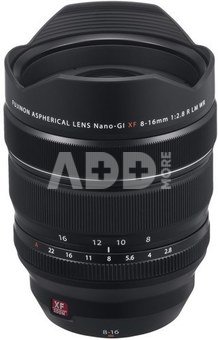
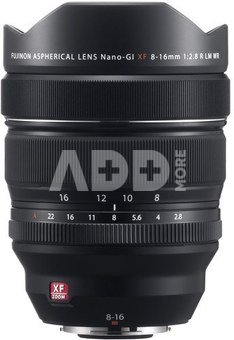
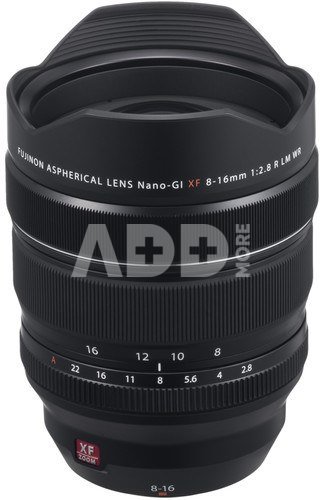
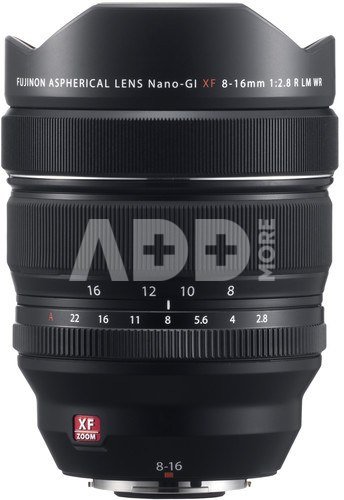
Fujifilm XF 8-16mm F2.8 R LM WR - itin plataus kampo ir itin šviesus objektyvas
Platus kampas ir šviesi diafragma
Siekiant pasiūlyti plataus kampo objektyvą su tokia aukšta diafragma Fujifilm kompanijai teko panaudoti 20 elementų 13-koje grupių. Tarp elementų rasime 4 asferinius elementus, šešis ED elementus, tarp kurių trys super ED elementai. visi jie valdo chromatines aberacijas, iškraipymus ir kitus nepageidaujamus priedus tokio tipo objektyvuose.
Matymo lauko iškraipymų valdymo mechanizmas ir dviguba Nano-GI danga
Objektyvas turi ir koregavimo elementą, kuris, priklausomai nuo pritraukimo lygio pakeičia savo poziciją, kad būtų išlaikytas ryškumas visame kadre. Pirmųjų dviejų elementų galinė pusė yra padengta Nano-Gi danga, kurios pagrindinis tikslas - sumažinti išsiliejimus ir saulės zuikučius objektyve,
Tyllus ir greitas automatinis fokusavimas ir tvirta konstrukcija
Automatinis fokusavimas pasiektas greitais linijiniais motoriukais, o pats objektyvas yra užsandarintas 11-koje vietų taip paverčiant jį atspariu dulkėms, drėgmei ir temperatūroms iki -10 laipsnių Celsijaus. Objektyvas padengtas fluorinu, kad prie jo nekibtų drėgmė, dulkės ir purvas, taip suteikiant papildomą apsaugą jo naudojimui lauke.
Typ of Sensor
APS-C
Focal length Movie
8 mm
Image stabilization
Nėra
Discuss with a consultant in Kaunas
We don't have
Klaipėda Address: Birželio 23-iosios g. 23g Working hours: I-V 09:00 - 18:00 VI-VII not working Phone: +370 674 59488
Discuss with a consultant in Klaipėda
We don't have
Klaipėda Address: Taikos pr. 17 Working hours: I-V 10:00 - 19:00 VI 10:00 - 14:00 VII not working Phone: +370 604 43972
1. How to choose the right lens for a mirrorless camera?
When choosing the right lens for a mirrorless camera, it is important to consider your photography needs and style. First, decide on the resolution and focusing distance you require. For portraits, lenses with a wide aperture, such as a 50mm f/1.8, are often preferred. If you enjoy landscapes, go for a wide-angle lens (e.g., 24mm). To capture distant objects, telephoto lenses (e.g., 70-200mm) are useful. Another important factor is the lens’s light-gathering ability, which affects performance in low-light conditions. A stabilization system can also be important, especially for longer lenses. It’s important to evaluate the build quality of the lens and the manufacturer's reputation. Try out several lenses and consider your future needs to choose the right and long-lasting investment in your photography.
2. Are all lenses compatible with all mirrorless cameras?
Not all lenses are universal for all mirrorless cameras. Different manufacturers may have different mounts, so it is important to check the lens compatibility with your camera. For example, lenses for Canon, Nikon, Sony, and other manufacturers' mirrorless cameras may not be interchangeable without adapters. It is also important to consider the sensor size. APS-C lenses may be disproportionately large for full-frame cameras. Before purchasing a lens, it is advisable to check the manufacturer's compatibility chart and consider the specific requirements of your camera. Adapters can allow the use of third-party lenses, but there may be some loss in functionality or quality.


















Reviews
0 average rating (0 votes)